Why Curious People Help Companies Move Faster | John Uprichard
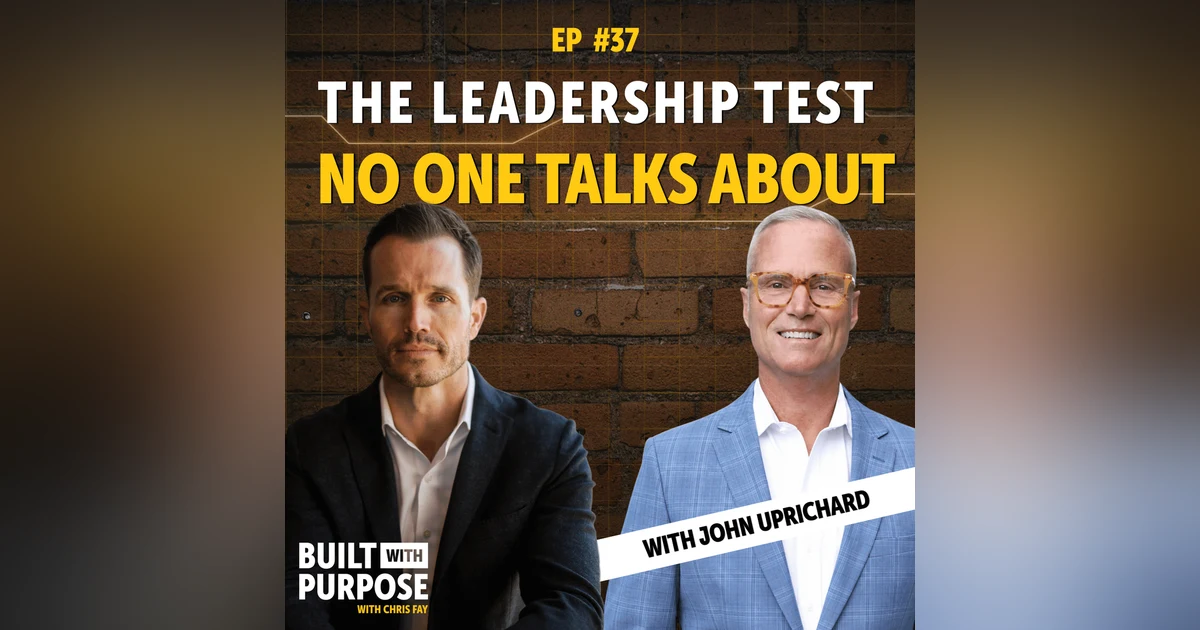
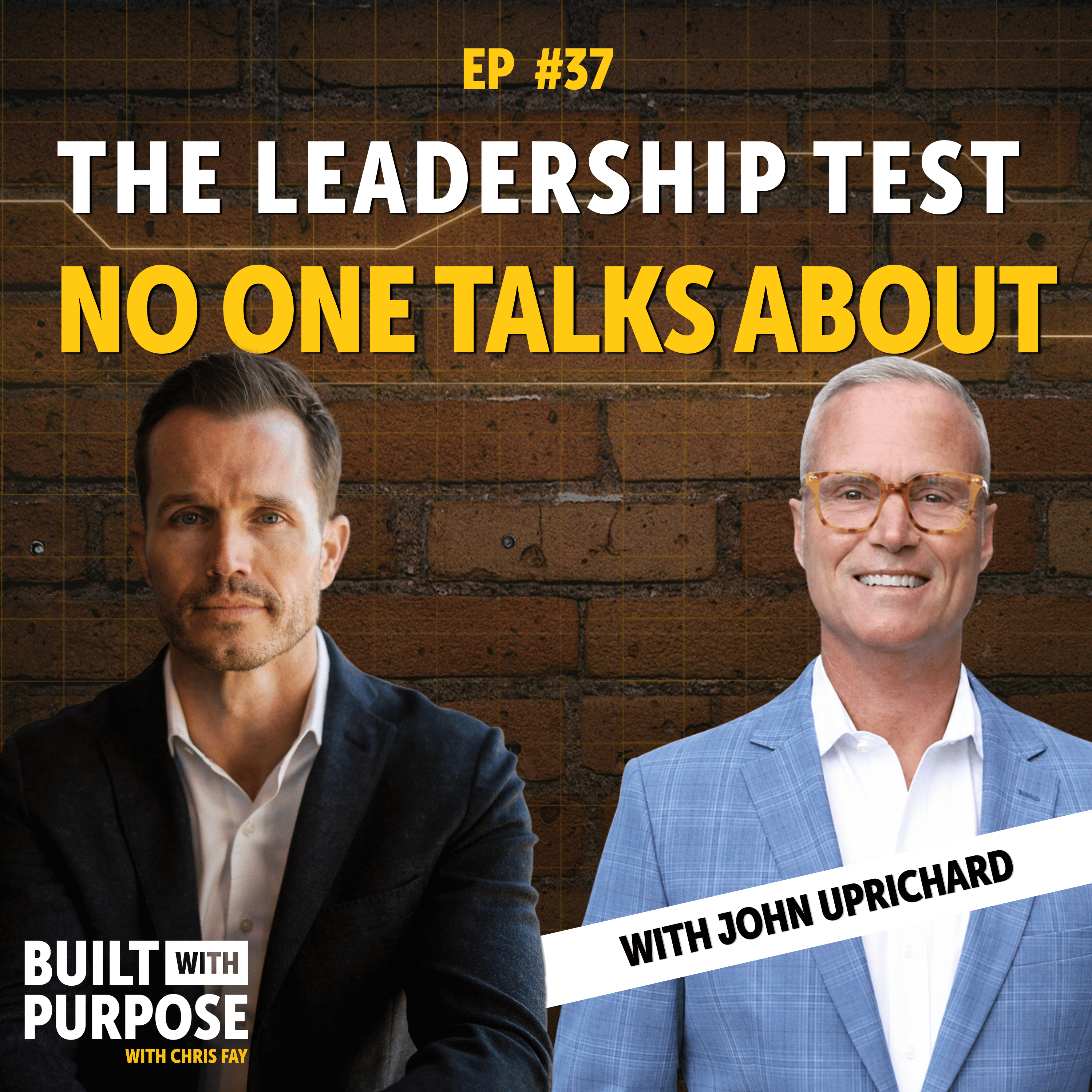


In this episode of Built With Purpose, Chris Fay sits down with John Uprichard, CEO of FGP, for a conversation about culture, growth, AI, and the everyday habits that shape great companies and great people.
From building teams to developing future leaders, John shares practical lessons on curiosity, accountability, and why growth starts outside your comfort zone. One of the most memorable moments of the episode centers around the “shopping cart test” — and what the little things we do say about who we are.
Chris and John also unpack how AI is changing the workplace, why curious employees are accelerating innovation, and how strong cultures are built intentionally over time.
Topics Covered
- Building great companies through great people
- The “shopping cart test” and what it reveals about character
- Why curiosity matters in the age of AI
- Creating cultures that encourage growth and accountability
- Leadership, legacy, faith, and family
Key Takeaways
- How you do the little things is how you do everything
- Growth starts outside your comfort zone
- Curious people help companies move faster
- Great cultures are built intentionally
Connect with Chris and John
Chris Fay
LinkedIn: https://www.linkedin.com/in/cjfay/
John Uprichard
LinkedIn: https://www.linkedin.com/in/john-uprichard/
Chris Fay: Welcome to Built With Purpose. I am Chris Fay, and this is the show where vision meets execution and leadership leaves a legacy. From design studios to innovation hubs and product lines to skylines, we meet the people building more than great companies. They're creating culture, driving impact, and shaping what's next. These are the stories and strategies behind how the world gets built with purpose. â Welcome to built with purpose today. I am excited for a number of reasons. Number one is I've got my buddy John you pictured here John and I have known each other actually for a number of years. But the other cool thing is that I always love to have CEOs and visionaries that live in the same town as I do. So John actually is â is is a native here of Greenville, South Carolina. He's sitting in his office about probably two miles from me. John, welcome to the show, my friend. Yeah. Thanks, Matt. good to be here. You know, we talk a lot in the technology space and kind of engineering, construction, people that are building the world. And so what's really cool about having John on the show is John is in the people business. No matter what your business is, if you're a leader of teams or organizations, it's all about people. And so John is the CEO of Find Great People, better known as FGP here locally. And so John, man, I'm really kind of excited to dive in. As you and I were warming up earlier, we were talking about AI and people. And so there's a ton, a ton of questions that I know that we can get into. But first off, just give us like, kind of give us little bit of a high level, man. Give an introduction to yourself and what you've been doing. I asked you before about, you you're a naval officer and I'm really excited to hear about that. just give us a high level, man. Yeah. Well, I always like to say, you know, sort of first and foremost is I am, I'm the husband of Chris, picture because my boss, my, my CEO. that's, that's who I work for. No, so listen, I married for adult children and, â you know, and I work at FGP and we are, we're in the people space. It's interesting Chris, because, â you know, about half our business is in South Carolina. Half of our business is across the country. And I think a lot of people just associate our brand with like maybe a staffing company or recruiting company. And the one thing I share with our clients and a lot of the folks who work on Mike, we do a really bad job telling our story because we're so much more than that. I we do recruiting. So if you think about the employment life cycle, so like the life cycle for your employees. Companies spend a lot of time hiring and we have parts of our business that specialize in areas of hiring. And that could be at the executive level. â It could be in a more specialized sort of individual contributor role. And then it could be sort of staff level as well. And probably I would say, you know, I don't know, man, probably 75 % of our business, 80 % of our business is on, is around sort of hiring. Once you hire people and you bring them out to the team and it's really about integration and then development. So through our consulting business, we do a lot of work around developing and how do you grow your people? How do you get more out of your existing team? And then sometimes unfortunately you to transition people and we have a group that actually works with organizations on transitioning â employees. They're really helping sort of get people to, you know, that soft landing and help shape a path forward. So if you think about sort of that life cycle of an employee, we have people solutions at different levels that are specialized to work with companies across the life cycle of all their people. Gotcha. Tell me, tell me how you got started in the business. I mean, you talked a little bit, I'm pretty sure you bought a small company, but then started obviously the FGP brand. mean, tell me about how you got into this business. So I wish I could tell you that it got in sort of with this great intent and strategy, but you you mentioned a officer. So I was, I was coming back from a deployment in the Persian golf and I had resigned my commission and I had moved my wife, Chris here to Greenville back in 99 and then deployed to the golf for about six or seven months. At the time we had our son, Matthew, he was, I think it's like a year old. and moved her into a rental house here. I'm on the John F. Kennedy deployed. I remember we didn't have a lot of communication back then, no cell phones, but we did have sat phones. And I remember I did get to call her she's like, hey, by the way, I bought a house. And I'm like, okay, great. But- Better keep working. That's the job security. I come back from the Persian Gulf to Greenville and I just started looking for a job just like everyone else. looking for job. And I tell folks that, you know, you usually don't find recruiting, recruiting sort of finds you. went to work for a large national company and about a week or two into it. I'm like, Hey, this is really unique. I'm like, I think it's sort of sales, but it's like HR. And, and that's, that's how I got into the business. I got out of the military because I had lived in five places in eight years with this national company. They wanted me to move and they'd asked me to move a few times. At the end of the day, probably divine intervention. I met my partner T Hooper and who was already sort of in process looking at a small executive search firm. And, I got to, you know, be part of that and, and find the company. And that was in 2002. It was, I mean, you think about 2002 that sort of tells you I'm old. I'm not that young anymore, but it was, I mean, it right after 9-11. Right. Right after 9-11, we were in a recession. We're in a variable revenue model and we're in the apparel textile space. We did some technology and what that all means is, you know, we had great people. That's the one thing we knew. We had incredible people and we said, hey, if we have great people, we can pretty much accomplish anything. but we knew we had to re-engineer the business pretty quickly. So we started that re-engineering process of the core existing business. And that led us to an 03 to rebrand the company to FGP. Find Great People. And Brains on Fire, it's a great story. Brains on Fire did our rebrand. And Mike Goot and Robin Phillips, he sort of helped found Brains on Fire. And I can remember talking to Mike Goode and I'm like, hey, we got like 20 grand. That's it. think you've like found a website. discovery on rebrands like that much. like, what if we just put you all up front? And they did it. â And the cool thing was that â our rebrand from Phillips International to, you know, find great people at FGP. was actually recognized for the rebrand 100, one of the top 100 rebrands in the country, which was pretty cool. then we sort of took off. And again, I really sort of call myself the accidental entrepreneur. I don't think I'm that smart. And a lot of times I think opportunity finds you. You just gotta open your eyes and see that the opportunity's there. We got into the staffing business because we had a client, corporate bylaw. â They called us, we had done some work with them on the IT side. â I had worked with them at my previous company and they said, hey, we need like eight folks for an accounting project. And my response was, well, we don't do that. And they said, okay, well, you have two weeks to figure it out. We need them this Friday. Yeah, so we figured it out. you for not offering that service, but you're going to offer that service. And yeah, you got to figure it out. Yeah. FIO figure it out. Which is the cool thing is that's that's still how we operate today. And I think it really sort of defines who we are. It makes us really agile. Yep. And but man, a year later, we had over 100 people out on billing and we were we were rocking and rolling. Then fast forward to 2000 and I think it's 2005. Don't not don't â lops laszlo. So golf balls. So we work with them on the recruiting side. They were closing their golf ball manufacturing plant in Western Minnesota, South Carolina. And their CFO had become a good friend and he said, hey, we're going to shut down the plant and we're shutting it down. and we're transitioning all the employees and we want to provide outplacement for them. We want to make sure we take really great care of them. Yeah, that's cool. And of course, the response was, hey, we don't do that. He said, OK, well, he said, you got a few months to figure it out. And he said, by the way, we want you to do it and you can't do anything at the facility because we're shutting the facility down. We're transitioning the employees. And then two days later, we're closing on the sale. We're selling the facility. So we ended up had a in Westminster, South Carolina. went into an old furniture store and made like a makeshift man, like career center. Holy cow. And we helped over 300 people, you know, sort of, you know, move forward to different roles, â in their career. So we're helping companies back to what I talked about this employee life cycle. We're helping companies hire. We're helping companies transition, but there was all that real estate in the middle. And we have people consistently, companies, companies say, hey, we need help with development of our people. We have these people issues. And I think that's where we, as an organization, we're confident in what we know and what we're really good at, but also confident in what we know and what we're not good at. that's a good thing because at that time we said, you know, we we probably need to look at an acquisition. So we acquired a company, Align HR, and end of 07, sort of 08. And that was, it was great from us. That was a strategic acquisition for us. It was gonna really sort of give us solutions across the whole life cycle. But I think the one thing that we underestimated was how different the business model was. And it. Like for a few years, we're like utilization rates, billable hours. What does that mean? Like, what does that mean? It took us a few years to figure it out. Uh, but again, I think it comes back to why we were bullish on buying Phillips Center Ash 102. We knew we could figure it out because we knew we had great people. And so fast forward to where we are today. That's one of the fastest growing parts of our business. And we're growing 25, 30 % a year. that part of our business. we just did our had our company meeting and, and did our quarterly business reviews with our different business units. And that business, â we served 178 clients in the first quarter. that's awesome. So we've gone from like a company that maybe had an â wait, had like 1520 active clients to the first quarter, we served 170 clients, is man, it's crazy. Do you so like the the when you said the figure it out FIT, FIO, I thought about FAFO, â F around find out, which is I guess probably a sister slogan. But so do you, I'm trying to think about like in your, in your business, you've got somebody that's coming to work for you and you're kind of telling them about like the kind of core values and culture and kind of setting the expectations like that kind of figure it out methodology. like rings rings for me because that's what I do. I'm like, Hey, just go sell it and we'll figure out how to how to deliver it. But then you've got people that are on the exact opposite. they're, they're like, well, I'm not I'm not ready to necessarily take that step until I really know how the program is built. And I will say it's probably good to have a balance of those individuals. You don't want a whole team of people just going like gangbusters and you don't want a whole bunch of people but like, do you talk about that? Is that like figure it out methodology kind of get in your talk track when you're hiring internally for you or talking about your culture? It does. It does. mean, you can't have everyone be sort of the FIO mentality. You gotta have, mean, listen, at the end of the day, it's just like, companies are like families. know, people have to be complimentary. It's like marriages. They work when people are complimentary. And you gotta have people who have the vision and the creativity to be able to see what could be possible. but man, they've got to be complimented and have someone right there with them who is structured and can deliver and finish. So it's like the vision and the creativity, how do we make it work with the people that actually truly can't execute and make it work. So for us, one of the things we talk about is If you look at our brand, our G, it is red. And that represents our three G's. And those are our three G's are sort of our values, which one is great. So we really believe that for us as an organization, â great companies that start to us. So we've got to have great people to have a great company. And then in turn, we'll be able to help build great companies. The second G is growth. so we, you know, we're a growth company. We think about growth all the time. We talk about growth all the time. And we also are very upfront with people that growth starts at the edge of your comfort zone. So when you come here, you know, we're going to make you, you know, lean in because we're going to make you uncomfortable. It is not uncommon for us to tap someone's shoulder and say, Hey, by the way, what do you think about, what do you think about this role? And usually the response is, â yeah, don't, I'm not, I'm not thinking about that role. And they're like, we know, but we are. And it's like, and really sort of pivoting to where we really see someone who it's like, we see someone who may be in a role that we're like, Hey, they're a great person. They'll be great with us. But maybe that's a job. We're like, can we think we can move you here? and you can have a career. So you want to have a career or do you want to have a job? Because we think you can have a career with us if we put you in this new swim lane. Love that. We were talking about the kind of getting comfortable, getting uncomfortable methodology and like that's where growth comes from. And you know, never, you're never going to grow if you just continue to do the same things over and over and not challenge yourself. Right. I mean, you got it. You got to put yourself outside of that comfort zone. Yeah. And our last G is gratitude. You know, we get to do this versus we have to do it. And I think gratitude is something that really aligns with our purpose. Our purpose is build great companies that impact lives. And we really believe that we get to help people with employment. And we think about what's one thing that impacts a family more than anything else. And that is. know, it's employment. So we so we're grateful that we get to, you know, impact lives. And man, it's cool, we get paid to do it. Right. Right. Well, it's fine. I mean, just have, you know, I've dealt and worked with your company over the years. And, you know, I think it's it your your culture and your people definitely stand out, you know, I mean, and especially if you're in the people business and you're selling recruiting and you're selling these services and consulting and outplacement and all the things that you do. Like if your core is not strong, it's going to be hard for you to make anybody else's core strong. So there's probably, I don't want to say even like an even more like amplified pressure, right? But like you all have to have your business on such great lock with such great people because that's what people are buying. know, they're buying a company that they likely look up to and respect and... and feel or maybe kind of at the the pinnacle or leading the leading the way kind of the the beacon of light on the hill as it relates to people and culture. And I mean, I know that I felt that in your in your business. But is that like is that ever a pressure for you to think about like how we've got to make sure like internally we've got our stuff right because it's it's us that we're selling to our customers. Yeah, I think for us it is we have to continue we have to continually improve our fitness. as an organization, everyone works out, we work out to become healthier, improve our fitness. I think we look at it as organizational fitness because to your point, people expect us to be fit. And so the one thing that we focus on is how do we continuously improve how we work? And that can be how we work with clients, how we work with candidates, but more importantly, how do we work together? How do we work with technology? â I think the other thing too that we also realize is for us, we try to really instill in our team that we're leaders. A lot of the organizations we work with, you might work with a hiring manager that has maybe hired 15 people in their career. And this could be one of the, know, someone who's been with our organization for three or four years. mean, they've probably hired you know, been part of processes to hire like 500 to a thousand people. with that, they're a subject matter expert. But I think the one thing that we recognize and try to instill in the team is our job, you know, leadership is in a position, it's a process. And our job is to lead people through the process, use our expertise and really lead them in sort of a consultative way. we have, that's something that we're. We just continuously remind our team, I'm like, hey, lead them. They're looking for us to lead. Yeah, I love that. Yeah, which means we got to provide direction on how we get to the outcome. Then we've got to keep stakeholders aligned, client stakeholders, candidate stakeholders. And then we've got to what really sort of set the level of expectation around engagement. that we need from all these stakeholders throughout the process. who in your, I mean, is inside of your organization? So first off, I love the fitness. I've got a great buddy. He's a good, he's actually a good friend of yours as well that talks about like organizational fitness and financial fitness inside of the businessman. And I love that. We actually had coffee, Thomas, I had coffee with him this morning. We always have a Friday morning coffees with the, with the boys. And â he, he, he said the word fitness again. like, I've heard it come from you. â as well. I love that. like inside of the business, it just your, is it the core executive leadership team that's responsible for setting that? Do you have somebody that just kind of owns day to day to make sure that as you're going across the company, this kind of lead them methodology, the fitness is in place? that you? How do you have somebody kind of own and make sure that's put into the business? One thing I can tell you, the role I play is very today than was years ago. I don't think it's really one person. I think the one thing we have realized as we've grown, and this is where my partner T's is so valuable because he's like, hey, how do you get it so the business can scale past you? Can scale past, it's not really dependent upon one individual. So it really comes back to building out sort of a leadership and management structure in our business. So we have an executive team, but then we have really strong next level leaders and â we're consistently looking at sort of how do we develop our own people. We actually pulled someone out of the business probably about three or four years ago who was one of our top level producers and all she does is work on developing people within our team. And we look at that as such a great investment. The other thing that we've also done is And we do this with clients. have created sort of next gen leadership programs that are maybe one or two year programs where you take a cohort of maybe eight to 10 people, you put them through the program and you wash, rinse and repeat that every few years. And then the compounding effect is, man, now we have like 20 to 30 leaders. People have been through that program who understand the platform from which we lead. and sort of what we expect as far as elevating and caring for people. And we actually have one of those in place. So we have our second program. We'll finish it up probably in about six months. And now as an organization that has around 100 people, we'll have almost like 15 to 20 people have gone through that program. Yeah, that's good. Yeah. And the cool thing about that is when you have a program like that, think a lot of times people think, okay, hey, what's next? And what's next is it could be maybe promotion to a different role, but it could be, hey, we're just gonna pack on more responsibility for you laterally. So we're trying to build capabilities and capacity for you to even take on more within your existing role. There was something that I read a couple of years ago about, and we had talked about it internally, but this idea of leadership. And oftentimes people think that leadership is your job title, like a manager, executive, know, president, vice president, whatever, whatever, you know, director role is, but this one was, you know, leadership is really more of a state of mind. So you could be leading a team or you could just be leading yourself. Right. And so if you, if you look at it less of a title and more of a state of mind, it changes your concept of leadership development. And, what are the skillsets that it takes to first off, be able to lead yourself, but then secondarily to potentially lead. other people in the future. And I was a really interesting article that I read and kind of switch my thinking a little bit because you talk about leading and I love just lead by example. And there's just part of things I talk about a lot in my life. But it was just interesting kind of thinking about that as a state of mind. So to your point, we want to put you this leadership development program. might not be putting anybody underneath you. We might just ask be asking you to be in charge of more things and maybe just leading yourself. Yeah. Well, and a great way to sort of look at leadership. And we actually just talked about this in our last company meeting is shopping carts. All right. So once you think about, you you go to Target, you know, you go to BioLo or I'm sorry, Publix, whatever. You know, you got a shopping cart, you know, you got either leave it by the car, you put it in the corral, or take it back inside. And it's always interesting to ask people, hey, what do do, It's always such a high percentage of folks. Well, first of all, no one ever says car. And when we ask a group, I'm always like, all right, there's always at least one or two people. Really? You know, you probably do leave it by the car every once in a while and you still want to admit it. But a high percentage of people, when we ask this question as relates to the mindset and heart of a leader is the crowd. So they, you know, they put it in the crowd and. And then also, you know, a smaller percentage will take it back inside. So I'm always fascinated. I always ask them like, all right, so, know, Hey, whoever put in the crowd, let's talk about that. Why do you put in the crowd? And the answers are typically, well, it's convenient. It saves time. You know, I'm close to it is easy. And, â and then they're like, well, that's, you know, sometimes they're like, well, that's what they build the crowd for. You know, it's like. Yeah, so at a minimum expectation is, yeah, they want you to put it back in the crowd. But then you ask people who take it inside and you're like, all right, okay, we got this like small group of folks who take it inside. Like, why do you do it? And the answer is always fascinating because it reflects sort of the heart and mindset. And what you hear is, well, that's where I got it. You know, I got it. I got to, I got to, I got to finish. I got to take it back to where I got it. got to sort of follow through. And then also they're like, Hey, if, I take it back inside, yeah, I mean, it takes me an extra, you know, 30 seconds, maybe a minute. â but they're like, but that's one less cart that, know, one of the kids. You know, see the, you know, and you see the folks at like Costco or probably, know, 38 carts and they have these big straps and they're like, it just makes that, it makes their job a little bit easier. It's fascinating because it's when it comes to, know, Mike, always say, okay, so when you take the cart back inside, do they give you five cents off or, 5 % off your next grocery order? No, there's no recognition. there's no incentive. You just do it because it's really sort of going to that extra mile. I think leadership and I think probably what defines a brand is really the moments that are unmeasured and really unnoticed. So it's like as a leader, the heart and mind is Are you willing to lead and do things without recognition? is that, that, just curious, like when you have those conversations, is that, is that an aha moment and then people can begin to develop that? Or do you think there's a, there's an aspect of wiring that, that are in individuals? think it, I think, I think it totally gets people's attention because the thing that I, that I really try to stress as, as a leader, how you do the little things is how you do everything. Yep. And every time that we use that with people and we use that with teams, two things happen. One is, this is our consulting business. And we had it even with our employees. And we actually had one of our coworkers the other day after this, a company meeting was at the grocery store, took a video of taking the cart back inside and sent it to his team. That's awesome. Because that's the other thing too. Sometimes someone's got to like, you know, get it on your radar to then also make you think about the mindfulness and say the mind. And you know what? mean, listen, I used to take it to the crowd, man, all the time. And you know what? Now I, I, take it back to the side. Yeah. So it's, it could be a learned behavior. Now the trick, the trick is, do you then translate to taking it to the corral? getting the whole stack of carts and bringing the whole stack of carts inside that would that would be like if you had something like you're like, all right, man, you got the A plus and in leadership school. I was in my 40s, I would probably do that. But now that I'm in like my mid to late 50s, I'm doing that. Yeah, from my pack out. Yeah. Or you could or you could add the increment. I'm just thinking about like the incremental steps. says You know, I'm going to take my cart and I'm going to take whoever the guy or girl that left their cart in the parking lot. I'm going to grab that one as well. You know what mean? You can kind of see this like this levels, but no, think it's, it's, I think, you know, it's, a, it's a good question and a good comment to say, you know, can these things be, are they, are they just how you're wired or are they things that can be learned or reminded? And, know, I think that's, that's where, you know, whether it be conversations like having these conversations with your team or with a leadership group or reading an article or listening to a podcast. It's just like there's these things we have so many things that are going on in our life and it's especially in leadership. It's hard man like there's a lot of things and sometimes you need to just have those little I don't remember what you just called it but kind of like those moments those little reminders of â yeah that that that is something I need to do now I can start taking action on it but I feel like that's what it helps. You just have to have the conversation, right? And then people are like, â yeah, that's a great idea. I'll do that next time. Yeah. And I think it is. So things, things can be learned, but also what we find is things are just contagious. Yeah. And, know, so as we look at that, one of the things that we also do when we ask that question, it's always fascinating to see from a leadership team, they'll say, okay, well, hey, like, you know, 70 % of us take the carts of the crowd, 30 % take it inside. Then the question is, okay, know, our team needs to, our organization needs to experience our leaders the same way. So we've either got to agree, we're either gonna pivot and make a commitment to take the cart back inside and do the things that aren't recognized for our team that we're not getting paid for. It's the same thing. We're gonna do the things that we're not getting paid for by a customer or client, but we're doing it because it's just who we are. Because it's sort of the right thing to do. And I think that's the compelling question is, all right, so how do you move forward? And then how do you get to 100 % and then translate that concept of the shopping cart to them what it really, the leadership things, principles in their business. Well, I love that man. And it's such a because you can put yourself in that situation and just think about that experience because I would say on the average, I'm probably the corral guy. I'm never the I'm never the parking lot guy. But I'm definitely the corral guy. And I think it's probably speed and convenience. You're like, â it's right there. It's meant for I'm gonna go and push it, push it. But it's funny. Sometimes if there's a decision point for me, you know, if I'm like halfway to the corral and halfway to the store, or close, I'll default to the store. You know what mean? But it's, it's, it's interesting to, but how to, how to put that into like our own daily experiences. Yeah. So my story is next time you're up, you know, you've got a shopping cart in your hand. Yep. You know you're gonna be thinking about? Taking it back inside. know what I'm gonna, I'm gonna grab two. I'm gonna grab two cause I got to make up for lost time. I've been the corral guy for too long. It's time for me to go like makeup. So In that time, where you're like, you are pressed for time and you put it in the crowd. You're going to be thinking about it. You're going to be like, I had to get to where I get it. I didn't think about the side. And I think that's the thing is that mindfulness and also the awareness when, hey, I just did something that was convenient and easy because listen, we're not perfect, but it's that. Mindfulness and awareness. Yep. Yep. No, it's fine. I think about it where it happens for me the most and and I'm not saying it's a pet peeve of mine at all, but but maybe it is a little bit is when you go to the bathroom and There's there's two things I'm not going to get too deep in this conversation one is where somebody has taken the last square of toilet tissue off of the roller and has left the roller on the â on the little on the little thing a little little hook so And was like, why you took the last thing, you know, just change out the stuff. And then the other one is the people that wash their hands and then â they dry their hands with a paper towel and they throw it at the â wastebasket and they miss it and it falls to the floor and they walk out. And so here at the office, like I would just would hope we got relatively clean people. So I'll change out the tissue thing and I'll grab the thing off the floor. But my boys actually gave me a hard time. We were out at a concert one time, you know, and you're in this like huge arena or whatever. We go to the bathroom together. I think they had the dryers and the stuff. I grabbed a â paper towel and I saw somebody's paper towels on the floor and I grabbed that one and I put it in the wastebasket. And my boys, like, they let me have it. They're like, dad, what are you doing, man? Like that's on the floor at a public restroom and whatever. I'm like, man, it just drives me crazy. People need to throw the trash kit. That's cool. They'll remember that. Yeah, yeah. Like my dad's nasty, but you know, he does he does the right thing from time to time. So well, I want to I want to â pivot just a bit because I think one of the one of the questions I've got for you just kind of diving into your space is just, you know, we talked a little bit about kind of AI and technology and just how the industry is changing. and I just it absolutely impacts individuals. And we've got people at our company we've talked about on the pod before is just like that, you know, there's this there's this fear, right and and of AI either replacing jobs or taking certain tasks or, you know, really augmenting and changing and you know, you guys talked to a ton of businesses that are out there and you probably look at you probably We're obviously talking to a lot of people that are applying for jobs, whether they're inbound or outbound. I'm just kind of curious right now in the general sense of what you see in y'all's business. Is this topic huge? Are the people that are looking for jobs, they finding challenges with needing AI skill sets? Are companies asking for this? How do you see it in your space? How is AI, the conversation working, just kind of in the blanket customer that you're working with? That's a great question. is. I think one of the things that we see is that number one, companies are lagging, employees are leading. you know, so I mean, it is I mean, companies as far as strategies and programs around AI, I they just they're not moving fast enough. mean, people are people are using AI that companies are providing. But man, it's almost like BYO AI. people bring in their own hat to work because they're like, hey, can do this. can get my job done faster. So it's interesting because at some point companies have got to get caught up. And I think the reality is the bureaucracy just sort of slows down or just maybe competing interest for time. The other thing too is we've also seen, I think this sort of fear factor that AI is going to replace jobs. think people have sort of worked through that and have accepted that AI is here and that what it means is instead of artificial intelligence, it's almost like augmented intelligence. So they know that they have to learn how to use AI and it's going to reshape their role. The other thing that's also interesting is that people don't think they use AI. And they don't realize how much they do use AI, you know, throughout the day. then when you show them, you're like, Hey, you know, right now, man, you go to Google and you type something on your using AI. like, really? So I think I would say that's sort of high level, but then you go down to sort of companies as we work with organizations. And like we were talking about before, I think you, you know, people start with how do we use AI? to really optimize how we work in our business. So I think the starting point is we have existing â systems and technology platforms and a lot of those technology platforms and those systems now have AI sort of bolt-ons and so everyone is automatically the reflexes to buy some of those bolt-ons. So what we see is probably I would say about maybe half of the companies we work with have AI assisted processes. I think that's a big thing to look at. And that's driven by really those bolt-ons with the existing systems and tools. I think the second part of AI that we're starting to see companies start to think about a little bit is â low value work and high value work. So going in and saying, okay, we have these like certain core roles. How do we inventory, identify an inventory, the low value work? And then how do we also identify an inventory high value work? For two different reasons. value number one, so that they can go in and say, okay, now we have sort of our target list of how we want AI. We want to use AI for this low value work. But then once we do that, then we're going to shift our know, team to more knowledge based work, which we consider to be high value work, but then we have to build capabilities on how to sort of really deliver in that high value work. So I think that's what we're seeing working in the business. And then I think, you know, we're also seeing some folks, you know, think about, now how do we use AI to help us really sort of drive strategy? and optimization on the business. And that's where I think the data lake comes in and getting LLMs and â pouring everything you can into that data lake and training the LLMs. We're seeing very few companies there. At least, especially in, I would say, mid-cap to small business, we're not seeing companies in that first phase. of full tones, but then I would say we don't even I think people are starting to move towards low value work and high value work. Yep. Yeah. Are you seeing it? Do you see I mean, just there's probably interesting like the the hiring process of what you all are a part of. Are you seeing people because you talk about maybe the employees are moving faster than the than the companies are. And I think that makes great sense. You know, it's easy for an employee to kind of get into the AI space. Very little friction. Start playing like are you seeing Are the resumes being, â you know, added to about all the AI skills? the searchers looking for people that have those AI skills? Are you seeing like positions that, you know, people that are either AI architects or leaders in the AI space? Like, are you just seeing that proliferate more through these conversations as well? We are. We're seeing companies specifically ask for it sometimes, but then sometimes it's more of an additive. where if they have it, it would be great. But I think what we see is over time, it's not gonna be an additive, it's gonna be a requirement. And because I think, like we were talking about before we jumped on, it really comes back to almost like talent density, which is how do we have more high performing people, but we have less people. So our ratio of high performing to performing and underperforming continues to grow. So we actually have less people, but we pay them more. So we have retention, but they're using tools like AI to be able to do more as well. would be interesting to even monetize that over time, because we've talked about that in concept is like, if we're able to grow the company without growing headcount, and at the same pace and augment a portion of that headcount by enabling people to do more knowledge work. It should mean that we would be able to be more profitable. And that means we pay all the, all the individuals more, right? Cause they're contributing at a higher level and we're reducing some of those lower level tasks. And so I think like that one piece is a, is a comforting aspect, especially for like growth minded employees, but people that want to grow with a company or they see kind of the future of their career. If they're like, you know what, if I can find a way to do significantly more work or higher value work for the organization and I'm okay offloading some of those lower value things, ultimately that makes me a significantly more valuable employee. And maybe that's one of the best ways for me to, progress in an organization, you know, is to try and find ways. think that one things, you know, and I think what's cool about the employees, â you know, maybe moving faster than the company is Yeah, that's one of the cool things about getting folks in that that are asking about AI or technology or automation or anything in general is it just gets the conversation rolling. You if you surround yourself with a bunch of people that are like, I will deal with this later, then you're probably going to end up dealing with it later. But if you bring bringing people in that are hungry and curious and kind of pushing the boundaries, it's going to force the company to begin moving. You know, so it's just interesting how the conversation has shifted and how for the employee, there's actually the people that embrace it. Number one, think their job satisfaction goes up because they're doing more of the stuff that they enjoy. But then they also are adding significantly more value and can do so much more for the business. Their earning potential goes up. I know like for us, that's the type of people we're trying to get inside of our company. We've got a ton of them. That's kind of the end of the folks that we have. But I think I was telling you, this last board meeting I was in, we're in South Bend, Indiana. Company is high court in Idaho. they're really intentional to have members of all their management team in the board meeting. And we're looking at some data up on the screen and we were asking some questions around it and three or four members of the management team, they're like fighting over taking the data set, running it through one of their LLMs and they're like, â we have the answer. No, it's this, this, this, and this. And it goes back to what you said, sort of that curiosity. And I think what we're seeing is organizations where they have, you have a lot of people who have that curiosity in our line and they are, they're accelerators. They are moving super fast and they're way out in front of, they might not be that far in front of the puck, but they are definitely out way out in front of the pack. And then with, you know, the other thing too that we see is organizations really aren't doing a lot to train people around AI. If they're training, it's like basics. It's like, we're going to train you how to use co-pilot. And we're doing that. We're training how to use sort of basic and advanced on sort of existing tools. But what we see, it's really sometimes the employees are bringing the organization along because you have one or two coworkers who will go out and self-teach and they'll come back and say, hey, Look at this. Look what I can do. Yeah. I got to figure it out. We could do this. Like I figured this out and look at this. And then people are like, what, did you do that? And now it's like the company's like, can you do that again? Can you like teach it? So it, where the company is really sort of an inversion where the employees are sort of sometimes. pulling the companies across the finish line. And hey, we got we got to move forward faster. was a situation occurring inside of our company where we had we've got one individual that I'm thinking about that is the most forward leaning person. mean, like, they'll stay up till two o'clock in the morning testing, experimenting, you know, just really kind of pushing the boundaries. And then there's, there's another one that's that's a little, you a little bit more pragmatic as far as like some guardrails and everything and I think it kind of goes back to where you and I were talking about before is that you've got to have the people that can provide some of the guardrails and the guidance, but you also have to have the people that are like super forward leaning to go figure it out. And sometimes they're going to need some guardrails and sometimes the guardrail people are going to need some motivation. But the one comment that we brought up to this group was that we can't stymie that individual's curiosity like at all. because we want them and need them to be out there figuring this stuff out. And if we pull them back too hard, it's not going to curb their curiosity. They're just going to want to go somewhere else where they can explore their curiosity. And so it's like, let them run, let them experiment, let them play, but then pull them in as a part before we roll it out across the organization. So it's just, agree, it's just moving so fast, but you need those really curious, excited people that are like, you know, my CFO is like, yeah, we finished dinner the other day and I went and I built this whole dashboard, you know, â at night and I was poking around on how to do XYZ and it's like, all right, love that man, like love that. So yeah, it's almost like you want to invert sort of the, you know, the pyramid of the organization, the traditional pyramid is like that. You want to invert it and say, Hey, you know what, the, you know, our, our frontline coworkers, our team that is interfacing with the customers. maybe who earlier in their career who are really using AI, you're hey, you're gonna drive what we do and you're gonna sort of drive it to the leadership versus the leadership who's got maybe more years of experience, maybe not as early adopters on technology, trying to set the strategy. Yeah, 100%. Well, a couple of things as we kind of come down to the closer, John, first off, I've taken a bunch of notes even though we record the sessions, I love the love we talked about like the little things, you know, how you it's really how you do anything is how you do everything or you know, those little things describe that. You know, we talked about, you know, learned but also but it's also contagious. That was kind of those leadership moments. You know, I love kind of building great companies and impacting lives. I mean, such cool stuff that you've talked about. So I've got three rapid fire questions for you. Okay, so just kind of thinking about this. So number one, what is if you had to just like, in a word or a couple words, like, john, Pritchard's kind of guiding principle for your life, what's what's like the number one thing that pops in your mind that you feel like like you just you live by it's who you are, it's where you're focused, it's it's kind of that North Star for you. I think just number one is just treat people, you know, the way that you want to be treated. And when I was, you you mentioned earlier, I was in the Navy. And I can remember, you know, I'm 20, gosh, 22 years old. get sent overseas to a small island called Diego Garcia. It's in the of the Indian Ocean. It's actually a strategic asset for us. with the conflict with Iran, they actually sent ballistic missiles towards Diego Garcia. Fortunately, they didn't make it. 22 years old, leading 35 people. I'm the youngest person. And so, â I had a senior chief who was great. said, all right, you know, treat them the way you want to be treated. And if you take great care of them, they will take great care of you. And, and he said, if you don't take great care of them, he said, they will not take great care of you and you cannot be successful without them. And that's what really sort of really resonated. um, you know with me is that you know success is really less about You know you as an individual and it's really more about you know, the people around you and with you Love that man. I love that. It's obviously it comes out in the way that you lead them I've seen you around your people and you're really focusing on their development and where they're going and and I love that man All right, number two, is, â what's one area that you want to develop in your life? Like what's the thing that you, kind of that one thing that you just feel like you want to get better at, that over next five or 10 years you're focused on? So I would say sort of two is, so I'm gonna sort of say time and pace. So I sort of look in where I am, it's like, hey, know, so I'm 56, I hit, you know, sort of, you when you hit 50, you're like, okay, wait a second. Like I'm, I'm, I'm at best at halftime, but probably in the third quarter. Right. And I think you start to think a little more about, um, you know, what do I want to spend my time? And then also, you know, um, what is the right pace that I need to, to, you know, to be running at? Can I run at the same pace? Then I ran out when I was 35, 40 years old. Sometimes we think we can, but I think time and sort of pace. And then the other thing also is â faith. For me is just, as I sort of think about my legacy with my, especially as I got four adult kids and it really comes back to that legacy of faith and sort of instilling faith in them. it's how can I sort of maybe preach the, preach the gospel to them, but without speaking. Just sort of what they see, like you said, you know, picking up the dirty paper towel on the floor. You know, how do I preach that gospel to them without speaking? Love that. Yeah, I don't know if you remember this, but there was a, I think one of the first times, I'm not going to say that I met you, but probably the first time that we sat down, we went over to the bagel shop on â Lawrence Road for maybe lunch or I don't know, was coffee or lunch or something like that. And you were at a time, I think, when your kids were in high school and kind of middle school, high school. I think you had some kids that played football, is that right? Yeah, football, soccer, yeah. Yeah, so you were talking about at that time, and I was probably pre-kids or rate, maybe I just had a baby, whatever, or my wife had a baby, sorry. But â I remember having that conversation with you and you were talking about spending the time like, getting to practice, going to the games, helping out. I remember your story about you and Stan had, you had met, being the chain gang. Yeah. And it's like, that moment, I don't know that you realize, but that moment actually stuck with me because as I think about my kids and just the time I'm spending with them and look, man, you're busy, I'm busy. We all got a lot of stuff going on, but just being present. You know, sometimes I criticize myself too much thinking that I should be teaching them more lessons or I should be like, whatever, but just the presence, being with them and being a good dude and trying to live my life the best that I can. mean, so anyway, that was a moment that impacted me, man. I remember going back, I remember where we were sitting to, where I was facing the window, you were facing the inner thing and you talked about how you were just there with your kids and being present and trying to obviously run a business and everything. I took that to heart. I would imagine that your kids, if you just continue to do the right things, those four kids are going to continue seeing you, living your life in faith. so I just encourage you by that for what it's worth. Cool. Thank you. And then this might be, this actually might be, but what are you most excited about? Like, you know, the next couple of years of your life, five years of your life, 10 years, 15 years? know, what excites me, I would say two things is, you know, You spend a lot of time and you're like, you know, trying to model, support, love your kids. And then as they become adult kids, what I'm excited is just to continue to watch them grow and just become really great human beings. I think sometimes we define success, sometimes for kids based upon jobs and roles and stuff like that. But I'm like, hey, are they kind? Are they nice? Are they loving? â and then also we got our first grandchild on the way. â man. And August. And so we're a little girl with our son, Matthew and his wife, Meredith, and, â our, our, our, our new daughter. So we're super excited about that. I don't think it's really hit us yet. â I think as we get a little bit closer, it will, but yeah, we'll have, â we'll have a new member of the family at the end of August. So looking forward to, you know, being a grandparent because everyone says that being a grandparent is incredible. â So I'm ready. That's awesome, man. That's awesome. Well, John, I can't tell you how much I appreciate you joining me and crazy cool conversation with you and just kind of listening and learn a little bit more about you. And, every time I try and have guests that, you the whole show about building with purpose is people that are doing things for really the greater good of something beyond themselves. And it's no doubt that you're doing that. So man, I just want to thank you for being a part of the show today and, and always, always welcome back. It'd be great to come back a year from now and see, how things are rolling over the past year. But thanks for joining, man. Yeah, it's my pleasure. All right. Take care. Okay. Thanks for joining me on built with purpose. If you have enjoyed today's episode, subscribe, share, and leave us a review. helps more bold leaders find the show. resources and show notes visit our website and connect with me, Chris Faye, on LinkedIn. Until next time, keep building great companies, cultures, and legacies with purpose.


