Own Your Own Plan: The Cure for Imposter Syndrome | Between the Builds
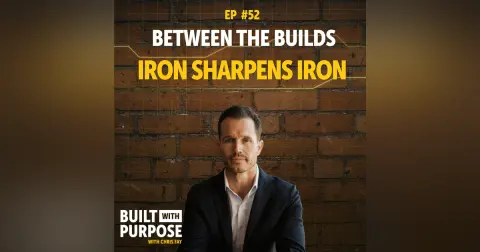


In this reflective episode of Between the Builds, Chris Fay flies solo from his brand new studio to revisit last week's conversation with Admiral Sandy Winnefeld and unpack something nearly every competitive leader wrestles with at some point: imposter syndrome.
Chris opens with honesty. Sitting across from a four star admiral, former Vice Chairman of the Joint Chiefs of Staff, and Top Gun instructor, then spending time in the fast pace of New York surrounded by towering accomplishments, he caught himself asking the same questions so many leaders ask quietly. Do I belong here? Am I worthy of this conversation? Am I doing enough? He shares how that feeling has followed him through the years, including time spent alongside highly accomplished CEOs in YPO who are buying, selling, and scaling businesses at a remarkable pace.
That reflection lands right as Chris's own organization heads into strategic planning season, with the executive leadership team gathering to define where the company is going next. It's his favorite time of year, and it sparked the core idea of this episode: imposter syndrome usually isn't about the other person. It shows up when we lack our own plan, our own vision, and our own identity. Chris walks through the inputs that shape his personal vision, from keeping the business privately funded, to being home with his family while his kids finish high school, to protecting his health. Those choices define what success looks like for him, and they're different from what success looked like for Sandy.
Once you own the inputs and the outcome, Chris explains, the comparison loses its grip. Highly successful people stop being a measuring stick and start being peers who pursued their own path well. The better question becomes how they set their vision and built toward it.
Chris closes with two actions for the planning season ahead, a candid look at why he'll never monetize this podcast, and a preview of how the show will continue to evolve with new conversations and guests.
Chris discusses:
- What it felt like to sit across from a four star admiral and Top Gun instructor
- How fast paced, high achieving environments can trigger imposter syndrome
- Why competitive leaders are especially prone to comparing themselves to others
- The real root of imposter syndrome: a missing plan, vision, and identity
- How keeping the business privately funded shapes the company he chooses to build
- Why being home for his family and protecting his health are part of his definition of success
- Seeing highly successful people as peers instead of measuring sticks
- Iron sharpens iron, and why you become who you spend your time with
- The January 1, 2028 exercise for defining what success means to you
- Why he'll never monetize Built With Purpose
The Most Powerful Moment
Chris describes a choice he gets to make every time he sits down with someone like Sandy. He can ask whether he's worthy to be in the room, or he can recognize that Sandy fought his own fight and pursued what he wanted from his life, and that it's okay if Chris wants something different. That shift turns intimidation into curiosity. Instead of measuring yourself against someone's success, you get to learn how they built a vision and achieved it.
Key Takeaways
- Imposter syndrome usually signals a missing plan, not a missing ability
- It's okay to measure success differently than the people around you
- Highly successful people are peers who pursued their own path, not a scoreboard
- Iron sharpens iron; look closely at whether the people around you build you up or break you down
- Planning season is for your life, not just your business
Connect with Chris
Chris Fay: LinkedIn /cjfay Built With Purpose: builtwithpurposepodcast.com
Iron Sharpens Iron: Welcome to Built with Purpose. I am Chris Fay, and this is the show where vision meets execution and leadership leaves a legacy. From design studios to innovation hubs and product lines to skylines, we meet the people building more than great companies. They're creating culture, driving impact, and shaping what's next. These are the stories and strategies behind how the world gets built with purpose. All right, everybody, welcome to Built with Purpose. Today is another episode of Between the Builds. It's a really great opportunity. Take a step back and think about the conversation that we had from last week and maybe grab one or two leadership lessons that we can carry with us. So, you know, first off, hope you like the new studio. We've I've moved out of my former podcast studio, have created this new environment. So we're testing something new. So hopefully, hopefully you like it. But you know, last week we we talked to an amazing individual, Admiral Sandy Winifeld, four star admiral, vice chair of the joint chiefs of staff, top gun instructor. you know, pilot, you know, you just think about and and and and and and and I would just tell you just an amazing conversation, some of the r really some of the best lessons in leadership. I loved how he was able to break things down of, you know, hey Chris, there's three things or hey Chris, there's four things you need to be thinking about and really distilling down those leadership lessons into something you can consume. But what's interesting is I so I had a had a great conversation with Sandy. And then two weeks ago I was in New York And you know, when you're in New York, it's super fast paced. You're going around, you're seeing, you know, all these buildings and all these great accomplishments and things that people have done. And, you know, if I'm being honest, you know, sometimes when you're around super highly successful people, or people that have you know, achieved so much more in perception than maybe what you have, I think we all can have a little bit of a sense of imposter syndrome. Like Do I belong here? Do I do I am I worthy to sit here and have a conversation with Sandy Winifeld? You know, am I am I worthy to be creating a business or to be leading a team of doing these things? And you know, it's very common for a lot of us, especially if you're competitive by nature, like you wanna be the best, you wanna be, you know, succeed, you wanna make the most money, you wanna lead the biggest team, like you wanna do these things. And so we can find ourselves as leaders oftentimes, Having this feeling of imposter syndrome. Like, do I belong here? Am I in the crowd that I need to be around? And especially if you spend a lot of time around highly successful people, it can lead you feeling sometimes a little bit subpar. Like, my gosh, like how am I ever going to stack up to those individuals? So I want to talk, I want to talk about that a little bit today. because I've experienced it throughout my life. I mean, you know, from joining YPO and being around a significant number of other CEOs that are highly accomplished and selling their business and buying their businesses and doing these great things. And you know, you take a step back and you're like, my gosh, I need to get on the horn. I need to start doing XYZ or I need to get involved here. I need to start doing these things in order to compete. And so it's very natural for us to be feeling that way. And so what's interesting is I was thinking about and reflecting back on this conversation with Sandy, who was just an amazing, amazing individual and so gracious with his time. It also reminded me as we're coming into our planning season. So our organization is getting ready to kick off our strategic planning. We've got our executive leadership team coming in in a few weeks and you know, spending time with with our with our folks talking about where do we want to go, what is the vision for our company wanna look like. And it's always one of my favorite times of the year because it gives you a chance to truly be reflective. And in the business, we take a step back and we really identify what it is that we're trying to accomplish. Where where do we want to go? Where do we want to take this company? And and then from there you then can create very tactical roadmaps of how to get there. So one of the things I want you to think about is we're starting to think about planning and and also who ultimately you want to become as a leader, is it's okay to have your own plan. It's okay to have your own goals and to measure success differently than other people would measure. I can sit across from somebody like Sandy and and sit and and question. And say, my gosh, I'm just not worthy to to spend time with this individual and like he's done so much stuff and I've not really accomplished this. Or I can say, look, Sand Sandy has he's fought his fight. He has pursued what he believed he wanted to achieve in his life, and it's okay if what I wanna achieve in my life is different, right? And so, you know, I think it's great to learn. From those individuals and to surround yourself with such great people, because I truly believe the iron sharpens iron. It's one of the things I talk to my kids about. You are who you spend your time with. So if you spend your time around high performing people, you have a much higher chance of being high performing yourself. If you spend your time around low performing people, likely you're gonna be have a higher chance of being low performing. So it's not to say that you don't spend time around these individuals, but when we have this feeling of imposter syndrome, when we have this feeling of being subpar, when we have these feelings of maybe not being good enough or not doing enough in my life and my business and my family, it's usually because we have a lack of our own plan and a lack of our own vision and a lack of our own identity. So I'm sitting here thinking about growing our organization and we're a, you know, a small to mid sized business and a software space. You know, one of our goals is to maintain private, private funding. Like I I don't want to have to take on outside capital. So that changes what sort of company that we can build. You know, I want to make sure that I can be home to see my family. I love to travel, but I want to make sure that I'm home with my family, especially in these last few years while they're finishing up high school. So it's super important to me that I've got that balance that I can be at home with my with my wife and and and my kids. You know, I really value my my health and so I wanna make sure that I'm doing the things that are going to do that. So there's all these inputs that ultimately are gonna create a vision that's exclusive for me. Now you can have a similar vision for your life. You can have similar goals to to where you're going, but ultimately you have to create your own plan. You have to create your own vision and your own purpose for what it is that you're trying to do in your life or in your business or in your family. And when you own that vision and you and you you say, look, I'm great if I grow a great business. And I'm great if I also am able to balance that with my family and my health and stay in the space and do these things. The outcome then is great. I can't expect to create a billion dollar enterprise by being present at home all the time. I can't create a billion dollar enterprise probably without taking on some outside capital. So as soon as you kind of understand the inputs and you also understand the output, then you can own your own plan. And when you begin to own your own plan, you can then have confidence in what you're trying to build. And then you can go and meet with other highly successful people that maybe have grown bigger organizations or have done different things or perceived greater things in in their career. And you can actually see them more as a peer that pursued their own path and were successful. And then maybe the learning lesson is how did you establish a vision for where you wanted to go? And then how did you ultimately achieve that growth? Like what are the things that you put in place to set a vision and achieve that growth? As opposed to trying to compare yourself to their success. So just a just a reminder for all of us. I think, you know, in in the United States, when we're, you know, on social media and we're interacting, if you're competitive by nature, I mean, all of us, all of us want to be our best. We want to be perceived as the best. We want to be liked by our friends. We want to be looked up to by our by our peers and and our and our colleagues. And so we also know that we want to grow and we want to learn. And so I would heavily, heavily encourage you. Today, a couple actions I would I would actually ask you to do. number one, just remember that iron sharpens iron. You know, look at the people that you're spending your time with day in and day out. Are they people that are building you up or are they people that are building you down? And if they're not building you up, whether it be in your faith, in your family, in friendships, and the values that you hold firm and the type of business that you want to create and the type of teams that you lead. Then you probably need to second guess and maybe think about who you're spending your time with. So, number one, I would just ask you to evaluate the individuals that you're surrounding yourself with. And are they building you up and putting you in a in a growth path to learn and become a better human being? Or are they breaking you down and then make some changes? The second thing is as we go into our planning process for this year, don't own somebody else's plan. Don't look at one of your peers or another leader. Or your boss or your team or another CEO or another executive or another coach. Understand how they've worked in their systems, but ultimately what's your plan? And you know, we're halfway through October right now, we're going into the end of the year. It's a great planning season for all of our companies, but it's also a great planning season for each of us as individuals. And it's a chance for us to take a step back in our lives and to look out towards 2027 and beyond and really truly identify what is it that I want to become? What do I want to do with my organization? What do I want to do with my individual habits? We've talked in the past about creating individual purpose statements. I love creating individual purpose statements because that really describes who you are and who you aspire to be, but ultimately you need a plan. And so I'd really encourage you to take, you know, take a couple hours, jot down on a piece of paper. You know, if I were to wake up on January 1st of 2028, these are the things that I would write down That would define my success. And and these are the things that are continuing to be truly important to me when I wake up on that, you know, a year or so from now. And then once you establish that goal, it's very easy for you to start thinking about well, what are the things that I need to be doing, you know, later this year and into next year that are ultimately gonna put me on a course to achieve that success. And ultimately own your own plan, own your own narrative. It's the only way that you can get around imposter syndrome. It's the only way that you can stop comparing yourself to other people. What makes you happy? Where do you want to see your life go? And just recognize it's going to be different from other people that are around you. And it's great to listen and compare and learn, but at the end of the day, you've got to own your life. You've got to own your own plan. And it starts with you ultimately creating a goal for what you want. So with that, we got some cool conversations coming up, you know, some really interesting. I'm starting to kind of think about how we shift and shape this podcast. You know, what are the conversations that we want to continually have? I've got some great feedback from listeners and peers and friends that that listen to the podcast. And, you know, I've really reflected back on, you know, what's the purpose of this podcast for me? And I love it. It's a great, it's a great outlet for me. Like even me conveying this message today. helps me learn something. I'm you know, sometimes I'm oftentimes a better speaker than I might be an individual coach, but this is great learning for for me to think about in my life. but the second thing is I really love short sharing these stories. You know, whether five people listen or 500 people listen, they're really fun stories for me to experience and then also really fun stories for me to share. So in that I'm just gonna kind of see how the podcast continues to shape and evolve and the types of conversations You know, honestly, one of my goals in this podcast is to never monetize this thing because I feel like if I ever try and make money at this podcast, all of a sudden my intentions change. Right. And so I'm really focusing on this for me and for those individuals that are that are listening. So with that, I'm I'm excited about some of the guests that we have coming up. There's some really neat conversations. You're gonna see me begin to augment and change some of the dialogues that I have. I think you'll I think you'll really enjoy it. And then and then also I would love your feedback. So Feel free to reach out to us on builtwithpurposepodcast.com, connect with me on LinkedIn or shoot me an email. And with that, I hope you all have an amazing rest of the week. I'm looking forward to continuing Built with Purpose. Okay, thanks for joining me on Built with Purpose. If you have enjoyed today's episode, subscribe, share, and leave us a review. It helps more bold leaders find the show. For resources and show notes, visit our website and connect with me, Chris Faye, on LinkedIn. Until next time. Going to great companies, cultures, and legacies with Earth.


