Diet, Data, and the Long Game: How Executives Can Add Years to Their Health Span | Dr. Grant Zarzour
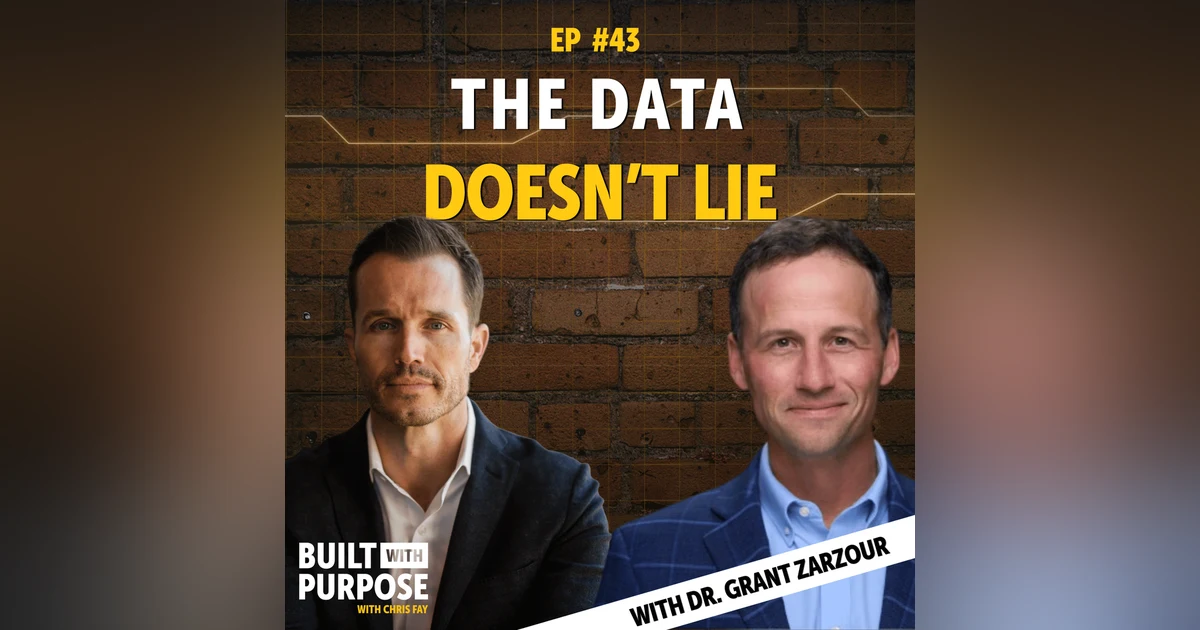


In this powerful episode of Built With Purpose, Chris Fay sits down with Dr. Grant Zazour — orthopedic surgeon, entrepreneur, and founder of Sperity Health — for a conversation about health, longevity, proactive care, and what it really takes to perform at your best as a leader.
Dr. Zazour shares his journey from growing up the son of an orthopedic surgeon, mowing the lawn of his father's medical practice as a kid to pay his way, to becoming one of Alabama's leading joint replacement surgeons while simultaneously building a data-driven longevity company. He opens up about the two defining moments that sparked Sperity Health: navigating his father's sudden brain tumor diagnosis and realizing the healthcare system couldn't keep up — and watching his two-year-old son receive a devastating neurological prognosis that conventional medicine had no real answer for.
Together, Chris and Grant explore why the healthcare system is built for reactive care, not prevention, and what executives and business owners can do right now to take control of their own health. They examine the science behind cardiovascular disease, colon cancer, metabolic health, and muscle preservation — and why most people are blissfully unaware of risks that are already building inside their bodies. They also dig into how Sperity Health is bringing this proactive, data-driven approach to companies at scale, starting with the executive team and expanding through the workforce.
The conversation also explores the business case for investing in employee health — including the relentless rise of healthcare premiums, the failure of traditional wellness programs, and why Dr. Zazour believes it will be the business world, not the insurance industry, that finally forces meaningful change in American healthcare.
Chris and Grant discuss:
- Why medical school teaches almost nothing about preventive care
- The single most powerful imaging tool for catching cardiovascular disease early
- How a continuous glucose monitor can quietly transform your weight and energy
- Why sugar — real and artificial — is the number one threat to metabolic health
- The case for muscle-building exercise over cardio as you age
- The hidden risks of GLP-1 medications most people aren't talking about
- How 66 days of consistency is what separates intention from lasting habit
- Why the B2B model is how proactive health reaches people at scale
- What wearables like WHOOP actually tell you — and how not to obsess over them
Key Takeaways
- The healthcare system is designed to treat illness, not prevent it — that's on you to change
- Cardiovascular disease builds silently; early imaging can catch it before it becomes a crisis
- Sugar is the most damaging element of the average American's diet
- Muscle mass is the single greatest predictor of long-term quality of life and longevity
- Small, consistent changes — not dramatic overhauls — are what create lasting health
- Your health span matters more than your lifespan; don't just live longer, live better
- Companies that invest in proactive employee health will outperform those that don't
- It takes 66 days to build a habit — most people quit before the science even kicks in
Connect with Chris & Grant
Chris Fay
LinkedIn: / cjfay
Dr. Grant Zazour
Founder, Sperity Health
Website: www.sperityhealth.com
Chris Fay: Welcome to Built with Purpose. I am Chris Fay, and this is the show where vision meets execution and leadership leaves a legacy. From design studios to innovation hubs and product lines to skylines, we meet the people building more than great companies. They're creating culture, driving impact, and shaping what's next. These are the stories and strategies behind how the world gets built with purpose. All right, everybody, welcome to Built with Purpose. â I am your host, Chris Faye. I am really excited to have my friend, Dr. Grant Zarzer on today. I know we talk a lot about â technology and and building and what things are happening inside of our business, but You know, Grant â has has got a pretty unique opportunity of a company that he's â he's developing and â really focusing on our health and our longevity and you know certainly it's been a big area of focus for me in my life and and as we think about like growing our businesses, we've gotta start with having a healthy â self and healthy teams. And so anyway, I'm really excited to have Grant talk to us today. So â Dr. Zarzer, I'm excited to have you on, my friend. How are you doing today, brother? â I'm doing great. Chris, great to be with you. â always enjoy getting together. always some great conversation and â thrilled to talk today. Grant, â Grant and I know each other â from â a group called YPO that we're both a part of. We're actually hosting â hosting a meeting together â coming up, and so we're really excited, gotten a chance to meet â you know Grant, his wife, and and got to got to know each other a lot a lot better. And so â Grant, I think you know You th this show is has originated kind of in this â you know, working in people that kind of build, you know, these lasting legacies, you know, building companies with purpose. â you know, so we've we really talk a lot in in CEOs and technology, but you you you have this â pretty pretty amazing story as far as kind of where you've come from and what you're doing today. And I'm really excited to dive into a lot of the things that you're talking about as far as you know, helping improve the health and the longevity of of the teams and companies you're working with. But just Before we do that, man, give us a high level overview of yourself and like who you are, where you've been, and what you're up to today, my friend. Yeah. So â for those of you watching on the video, you'll see I'm wearing scrubs. So the the day jobs orthopedic surgery. I did six joint replacements â earlier today. So I'm a glorified carpenter, â hip and knee replacement called Southern Orthopedic Alliance. We're the largest orthopedic group in Alabama. I have 40 surgeon partners, which means I get to hear about their feelings all the time. But â I'm down in Mobile on the southern tip of Alabama and â really enjoyed getting to help people walk again without pain and letting quality be our North Star. â but the last few years started Sparity Health â you know, as you mentioned, longevity company. â in one sentence, what Sparity Health does is we lower our members' risk of cancer, cardiovascular disease, and dementia by fifty percent based on data and science, not snake oil and Instagram. So it's been kind of a really fun â to build that. We're a B to B solution 'cause a lot of health insurance company or a lot of health companies are struggling with their health insurance and all of us want to live longer and healthier, but there's just so much noise out there. So we we kinda provide the quarterback â to help you what to do, what not to do. And â so I got I have to kind of two full time jobs, but I really enjoy it that way and I think it's This longevity is the way we're going to really change â the future of healthcare because we've got to get more proactive. So so A AI and Instagram are not the best source of health of health advice from for me and my family? Yeah, Chris, this comes to mind. â you know, I get this all the time when people go, No, I read this. Let me give you the latest example. It was â I think it was Wall Street Journal this weekend. It was â the cabinet â Trump's people are eating sauerkraut, and now that's The healthy thing to do now is just shovel sauerkraut in your mouth. Well, what they buried in the story was that they also stopped drinking alcohol and stopped eating sugar. Of course, that had nothing to do with their weight loss or success. It was just the sauerkraut. I tell people friends who who have â they made they didn't really go to medical school, but I tell them they went to medical school at Joe Rogan Podcast University. And â they're they're never in doubt. We gotta bring some facts, some data, some science, because â you it's very easy to scroll and get confused. Kind of mentioned wearing two hats and you starting this company and you're leading this other organization. But you you're in surgery every day. You said you did six surgeries today. No, that's right. Well like like like ha is it do you do you just do you love that balance? I mean, t like there's there's all sorts of things I could ask you about yourself. Like obviously you you love practicing, but you also love kind of this visionary component. I mean, it's a It's it's two different â two different perspectives. I mean tell tell me about like what what do you what do you what do you enjoy most about getting in the surgery suite there? You know, I've gotten to the point I do six hundred and something hip and knee replacements a year and comes are just really good, luckily. And people come back for a visit or two and then never come back again and say, I'll see you in the grocery store. I'm walking without pain. This is great. I mean, I had a patient recently who came, I did both hips, replaced both sides, and he was really struggling before. And he threw a picture down on the table of him walking his daughter down the aisle and he said, You did this for me. That's awesome. And and I've also spent a whole lot of time training and getting ready and getting good at it. And people go, Well, now you got the longevity, it's g getting you know, got lots of business, things are g going well. I'm in the hospital all the time seeing what issues that other patients are having then in the hospital, talking about colon cancer under the age of forty five is an epidemic, cardiovascular disease. I'm all the things that are killing us are ruining our quality of life. I get reminded of daily. And that's kind of maintains our North Star being how do we tackle that? And how do we make sure that executives and employees out there we tell people, what are you making all this money for if you're not gonna have the health to spend it? And â it it it I think it gives us â a little like more in tune with with what the market needs and what what patients and employees need. And did you did you always, I mean, was becoming a doctor and was this always kind of in your vision? Like, did you grow up and just say, look, I want to be a doctor and this is what I want to do? I wanted to be like my dad. And â I'm one of six kids, five boys and a girl. And â my dad was an orthopedic surgeon. And so when he was â practicing and I was ten or eleven years old, I just the summer came from school and I wanted to go hang out with dad all summer. So I was the patient care coordinator. I also developed x-rays in the darkroom. So I would pull out the new film and put it through the machine back when you had â the dark room. And they also they had a a landscaper at the office that they asked, how much y'all paying this landscaper? I mean, he's not doing a great job. And they said six hundred dollars a month. I said, I'll do it for 300. And so my mom would drive me with a lawnmower, a wheat eater, and the Lantanana plant, the jasmine, and the key to turn on the water. Yeah, I took care of all of it. You know, I always kept my eyes open and and lucky to get in medical school and go through that whole process. I actually got into medical school and deferred my acceptance. You know, I wasn't the first person they let in, but I had this idea of traveling the world for the year and and I got all this great suggestions from people and they said, â take a year off, go travel. I said, That's not like me. â but I went and learned about medicine around the world after â University of South Alabama said, Yeah, take a year. We'll see you next year. And I said, â now I actually have to do it â and so I went to all sorts of great places around the world learning about medicine. And it just â reinforced several things. One is that's that was my calling, is healthcare and and helping people â get healthier, live better lives. And two, I really learned a lot about how we're very similar around the whole world. All all we just â happen to live in different places. So so I mean I guess fast forward, so you know, you obviously orthopedic surgeon, you got this the huge practice that you're working on and then you you start thinking about kind of the first impetus of s of sparity. Like how did that first idea hit? â there were two major inputs. one is I mean I was fin finishing my fellowship, which is your last year of a hundred years of training, and I was going to join my dad's group. He was running the group and I was kind of foregone conclusion where I would go. And my dad got a brain tumor. And he was seventy-one, running five miles a day, â very, very healthy, no issues, and just got bad luck. And â I had to quarterback his care, where to go, who to see, how to get there. It got so frustrating to get to the specialist. We called Johns Hopkins to â they're the best. They said, We'll see you in three months. We didn't have three months. And I had to leave my board exam two hours early. To fly to Johns Hopkins to Baltimore on the last plane to go with my dad to take him through the emergency room in order to be seen. And I thought this just can't be how healthcare is. It can't be this bad. Two MDs trying to navigate the system was this difficult. And so I really wanted to help people navigate through the system. And so that was a big input for me. And then the second input on the longevity front certainly was my son. I have a boy and three girls. â my son is eleven today and he's the oldest. â nine, seven, and four are the girls. And when he was two, the school called on like day two and said, Something's wrong with your boy. And I said, He's been there like fifteen minutes. How do you something's wrong with him? Like he just got there. They said, â no, his eye contact, speech delay, Anxiety, behind just all sorts of things. And I was like, okay, so we go to a neurologist who spent a total of 30 seconds in the room. And he said, â this boy needs to be in an antipsychotic medication the rest of his life every day. He's never gonna make it at regular school. And mom, dad, buckle up. It's gonna be a long, hard ride. And Chris, I mean, you know, Bree. You tell me and Bree we can't do something. Yeah. â and then if you make it about one of our children, we will die trying. Yeah. And so we dove into something that I learned nothing about in medical school, which is proactive care. And we learned about functional medicine and we learned about dairy free, gluten free, low processed food, low sugar. We learned about diet, sleep, and exercise. We all these things that â some are becoming more and more popular and new, but some have been around a long time. And long story short, we kind of led Wyatt down this path of getting healthier and healthier, and his brain started to develop more normally. I mean, he got diagnosed with autism at two, moderate severity. And over the last nine years, â we keep inner inputting all these, you know, great solutions. And long story short, he's flourishing. He's at regular school, he's not on an anti psychotic, he's one of the smartest kids in the class. He's Chess team, swim team, basketball, all sorts of fun stuff. And the the big take home was about a year and a half ago at Christmas dinner when the girls say a blessing. Why they always say a blessing. Wyatt had never said one because there was kind of too much going on in his head. â but this night he stops us before we pick up our forks and said, I want to say a blessing. And we go, Okay, buddy. And he goes, Hold hands. So we hold hands and he goes, Dear God, thank you for a great day and for our blessings. And remember those who don't have what we have. And this is a kid we didn't know would ever talk in full sentences. And you know, Bree and I are crying, and you're only as well as your sickest child. And he's my biggest success. â my other three kids are doing great as well, but like how he's overcome this and now really doesn't have a diagnosis anymore. Because he's doing so well. And I'm not to say that's that that's not a â we're in of one. But â it turns out that the same strategies we used really dumbed down to diet, sleep, and exercise, and then preventative imaging in labs. And there is a health crisis in the United States, and we have we are getting where our health span, the number of happy years, healthy years you're on the planet is dwindling. Your lifespan I would argue is not as important as your health span. We want to be active doing things. And so many Americans circle the drain for an average of 14 years. Their health span has ended, but they're still here. And â we're the worst, â one of the worst in the world. And there are a whole lot of easy things we could do. And at the same time, you pair that with health insurance premiums, a double digit at least increases year over year with no end in sight. It's an unsustainable line item. And a lot of people's budgets that they're going, Man, our product's good, our expenses are down, but we gotta have healthcare and we stink at healthcare. Well, â we gotta start doing something different. So what's I mean, thanks for sharing that, man. I I obviously I knew I knew some of the the the the â story there. And it's amazing to hear, you know, any kind of entrepreneur that started a company, you start going back and you listen to the one or two things that really impacted them to to to take action, right? And you know, it's interesting. I've I've I've oftentimes wondered this and you know my f my â stepfather was a family practitioner and so I kind of grew up in a household with with a doctor and you know, but just from afar. Like it just I knew I didn't want to be a doctor, but I I knew and learned about it. We would go do rounds in the hospital and â you know knew knew about it. And then like in in my life as I've begun to think about more preventative care and you know I came from an active Athletic, you know, â family where you you ate healthy and you took good care of yourself. And so I was kind of grounded in those early on, â which I think a lot of folks aren't. â so I was given that that kind of that that that early gift from from my â family. But you know, it baffles me when I go talk to my family practitioner and I ask him him questions about things that are things that I'm exploring, right? And he said something to me. I so I asked him a question about a supplement that I was taking. I'm not going to ask you about it, but I but that was, you know, and he's like, Man, I got nothing on that. I'm like, really? Like this isn't it's not like that. Like it's pretty it's pretty out there. It's pretty well known. Like kind of curious what you're thinking. He's like, I got nothing. So fast forward the next time I come back to him and â we're talking about longevity. He says, you since last since you were here last, well, they've been starting to do some longevity training â or you know, healthy â training for us. And he's like, you know. There's a direct correlation between sleep and your health. And I was like, bro, you're like fifty-five years old, working for the biggest healthcare system in the area. And what like what so so I've got a I've got a bunch of questions for you, but but but one of them comes back to your you know, your medical training. Like what what what what is it? Why why does it seem so â common? To say I'm gonna, I'm gonna take this proactive effort in my life to learn and to eat healthy and to sleep well and to exercise and to do all of these things. but but yet the medical world doesn't seem to be built for that, right? It just seems to be built for, look, I've got a problem, I've got to get this person out the door because I got somebody right behind them. And it's just, it's just seems like a machine. And it it almost takes, at least this is my vantage point from outside, it it almost takes a somebody like yourself that's like, look, I need to go above and beyond what I'm learning in in â in the healthcare community because you could probably do great fixing knees and hips the rest of your life and take care of care of your family and have a great business, but you've made an intentional effort to go beyond what traditional medicine has. But I mean what what what is it? Why do you think what's been what's broken? Why is this not a conversation in healthcare education? Healthcare moves slowly and it this is a paradigm shift. â I mean, again, I I mentioned in medical school there wasn't one day of preventative care on diet, sleep, or exercise. â now, â on the transfer â the other side, I mean, we're great at reactive care in the United States. I mean if you get sick, this is the place to get sick. Let me be very clear. â we're we're very, very good at that. But at preventing it, â no, no, we that's not and the problem is insurance doesn't reimburse for prevention. And love it or hate it, this country the way we work is what do we get paid for? And you get paid for chronic this and advanced that and treating those things. When you come in, I mean I had a a buddy last week told me he went to his doctor in Atlanta and said, I'm forty-two, I've been I just did a marathon, I maybe lost a little too much muscle while I was training. I had a buddy dial like colon cancer two years ago at 45 years old. â you hear about these heart attacks and cardiovascular disease. What can I do? I know I'm healthy today. What can I do to stay this way? And the doctor said, You look good. Don't worry about it. And he was like, No, no, I want to worry about it. And he was like, I don't even know how we would get these things approved or if you're talking about and and the system is not going to save you. You've got to take a care in your own health and be proactive because i maybe in the next 20 years we'll see meaningful change in the healthcare system to start covering things like this. But for the next decade or so, you're going to have to do it. And you're gonna have to find the right solution and the right partner and the right team. And it's sad that that's the case, but this is twenty twenty six and it's not the strong that survive. It's the it's the flexible. We gotta adapt. Interesting. Well, and I even some of the things you even talk about preventative care, and I would even say some of the things that are covered on insurance, you know, I a bunch of folks in in our organization you know, special tends to be more males is is just simply going to get a physical. And I had a guy the other day he's like, dude, I haven't been physical in like 15 years. I'm like, go, go, like, go schedule go schedule that. And so, you know, I think there's just a lot of things that that folks can do to at least kind of take advantage of what's there. But but let's kind of pivot over to I mean, talk about like sparity. And obviously you've got kind of this B2B model, right? So it's less on the on the consumer, although you do have a consumer model in your business. But You know, what what are you seeing? Like, I would just say the average person that, you know, of your customer base, like what are they missing from an education perspective? Is it is there like a common challenge you see across all the people that you work with that you need to get them at least up to a certain level? Is there a certain level of education that that people need? Is it just getting the advanced testing or knowledge? Like, what what is the average American missing that, you know, you guys at Sparity just See, like if we could just level everybody up from here to here, that would solve a major problem. You know, there there are many thoughts and I'll I'll go through them kind of one, you number one kill of Americans is cardiovascular disease. And the problem is is it silently kills you. You don't have any symptoms until it's really late. Chest pain is cardiac muscle dying, and it's usually requires ninety percent or more blockage. Well, you built that ninety percent over time, but you were just blissfully ignorant. So, like one takeaway from this is the most powerful preventative imaging tool on the planet is a CT coronary angiogram. Not a calcium score, this is a coronary angiogram. Once every five years, I want to see the soft plaque around your coronary vessels, around your heart to see what your status is. Because if I can tell you, Chris, you have a 50% blockage right now on one of your coronary arteries. And if you don't do anything different, it's just going to keep getting worse over time. You will take action. You will change your diet. You will make sure you're optimizing your exercise. When you are faced with your own mortality, you will make changes. A couple other labs that are great to get, lipoprotein A and Apo B, not commonly gotten labs, but they're great indicators of cardiovascular disease. So that would be my favorite on cardiovascular disease. â the number one on cardiovascular, let's talk about and then and then and so so if somebody has you know, they go get the they get the scan and then it comes back and there's a blockage and they face they face some level of mortality because now it now it's on them. What what do you see as like the the most common thing that the average American is doing to contribute to that? Like if they is it is it diet? Is it exercise? Is it I mean what what is it? What's the number one contributor there? It's diet. â it would be the number one in my opinion. I mean exercise is the fountain of youth. It is a wonderful thing to do. And if you have to pick one type of exercise it's muscle building activity. And it â improves your metabolism. Everything's great about exercise. But we are poisoning ourselves with our diet, and it starts with sugar. Real and fake sugar is the devil. It tastes so good and it is so bad for you. And ever a lot to way too many people start their day with a caramel frappa mocha ciocolate with a thousand calories and a hundred grams of sugar, and you are screwed. I mean, for the next two days, you can't lose any weight, no matter what you do. And â that's why I think that you know there's this whole conversation on GLP ones, which I'm not the biggest GLP one guy because of the side effects, most notably muscle loss, which nobody over the age of forty needs to be losing any muscle. And that's the trade off. But I think the most powerful weight loss tool on the planet is a continuous glucose monitor. You learn your body's relationship with sugar. You've seen people who are diabetics, they wear it on their arm, you can wear it a few places, but it shows you your body's relationship with sugar and it gamifies your glucose. And so when you can see what happens to your body when you have a big, you know, glucose sugar meal and you see the spike and you see that you're going to be gaining weight for the next six hours or whatever it may be, and then you see what happens when you have a healthier meal. I mean, we have so many executives, especially that have lost 10 pounds in two months. And everybody assumes they're on a pill or a shot, and they go, No, I'm on Sparity Health. And they show their whoop band and our logo on here. And they go, This this CGM has taught me that I was eating a Mediterranean diet, but I was eating two pieces of pita bread every night. That pita bread was destroying my blood sugar. So now I eat a half of one piece. That's the only change I made. And now I've lost 10 pounds in two months. It it it and everybody's different. Some you you may eat certain foods and you're Glucose doesn't go up. I may eat the same foods and mine goes crazy. And that's why you see people go, â they can eat whatever they want. Well, their their blood sugar is not as affected, and we gotta figure out your system. And we love a nutritionist kind of guiding that process. But â I love a CGM because sugar, I mean, don't get me wrong, I I'll tell people five days a week is our goal to be good, not seven. Okay. I'm not eliminating these things from my life. I'm just trying for interval improvement. Yeah. I love that. That that was actually way â way back when when I was really serious in the in the gym, I always looked at like healthy eating, diet, exercise as as almost like a job. And it was like, you know, so was gonna eat super clean and do my thing like Monday through Friday and then cheat a bit on the cheat a bit on the Saturday. And I think that's one thing I've I've seen people that have tried to, you know, cold turkey stop. you know, alcohol or eating unhealthy or doing what have you. And and the sustainability of that diet is terrible. It's like, you know, you got to give yourself some forgiveness and and ability to just to go cheat and and to go ha, you know, ha have a have a slice of pizza, you know, go have a beer. Two things come to mind. One is, you know, â Chris, you and I we play golf every now and again. When I play golf, a whiskey front comes through and stalls on my foursome. Okay. And like I I I enjoy that. That's not every day. That's like once every, you know, couple of weeks. But like You know what the most common item that the superagers all do? They're social. They get out, they have friends, they have purposeful engagements with other human beings, they volunteer, they work. You have to still be social. So we don't want you to stay home, work out by yourself, never eat anything fun. We want you to go to the football game, drink a beer, have a great time, because there's some great data and science behind that. â so in the people would point to the red wine and the studies. We think it's because they're drinking the red wine with other people and being social. So that's a big part of it. And life still has to be enjoyable and fun. So it's finding the right balance. Yeah, that's interesting. So all right. So so cardiovascular disease is kind of number one that you see. And obviously diet, biggest impact, number one is is is sugar. Like what what else do what else do you see? What are some of the other killers that are out there? Nobody, I mean, especially people that are under the age of fifty, â the number one cancer killer is now colon cancer. And I know way too many people that â have passed away or have advanced colon cancer today under the age of fifty. And â you know, colonoscopy starts at forty-five. â there's not usually a line out the door of people running on their birthday at 45 to get a colonoscopy. I understand you still need that and as indicated by your doctor, but we really love every three years doing a cola guard, â where you send off the sample and we can make sure that. you know, we don't have anything we're missing. â because we've diagnosed several executives with colon cancer, stage one or even earlier, and they go get a colonoscopy, they get the polyp clipped, and then it's â three years they come back and get another colonoscopy. But no chemo, no radiation is needed because it was so early. But they had no symptoms. We didn't send them for a cola guard because we were worried about them. They were just that was part of their plan. And they were completely had no idea. And so you can imagine if they had waited years and years to get their colonoscopy, it's a much different story. Nobody should be dying of colon cancer. So what is I I've actually read I've read a pretty good bit about the spike in colon cancer, especially of folks kind of in this in this age group. Is there something? Is it is it the processed foods? Is it American diet? Is there you know, I I actually listened to a podcast â a few weeks ago where there was a a really interesting theory about what has caused â this stuff of colon cancer and there was a I think it was in in the basically the way that far farmers are are treating, you know, chemical treatments and everything that are going on there and I mean any any kind of backup or science that you research there? Yeah, I mean diet is the number one answer, processed foods and causing inflammation. So you talk about treated substances that we're eating that can cause inflammation in your body. Your colon doesn't want to be inflamed all the time. And when you eat foods that cause it to be inflamed, it's trying to fix the inflammation repeatedly. Well, let's say that it's used to or it's supposed to fix inflammation once every three weeks. The average American is making inflammation four or five times per week. So your body is constantly having to fix the lining of your colon in large and small intestine. And at some point it's going to fail fixing the lining of your small intestine and large intestine. So we don't want to stress it too much. We're we're putting our our intestines in hyperdrive, and absolutely it's related to food. I mean That's why the movement on eating things that grow out of the ground and more organic, more healthy, and I understand those things are expensive, but like the farmer's market, and y y the â certainly substances that could be treating some things are concerning, but a local farmer's market is always going to be a great source â for lower inflammation, and we don't eat nearly enough fiber. And if we do eat fiber, we eat it from a bar rather than a whole grain of fruit or vegetable. Whole grains, fruits, and vegetables should really be the cornerstone of our diet. And you know, 25 different ones or you some can be the same per week. And that, by the way, is how you change cravings. You're in your microbiome, in your gut, you have 500 million neurons that tell your brain communicating back and forth, the gut-to-brain axis. You are what you eat is not a new saying. Well, if you can seed your microbiome in your gut with healthy whole grains, fruits and vegetables each week, 20 to 25 a week. then your cravings change to healthier foods instead of Popeyes. And that's how it works. If you keep poisoning it with all these other awful foods, then that's what your body will crave. â so I think we got to get closer to more natural foods and and that's the solution. Well it's it's in and honestly it's it's about building habits too. And there was, you that we've done some research here and we talk about internally about how long does it take to build a habit. you know, and it's it's a sixty six day process to at least begin to build that habit and how often we give up after a few weeks. So you're sitting here like, all right, well, you know, whatever I start doing today, in order for it to become somewhat habitual, you know, we're here we are in â what, end of June? You're talking about end of July, end of August. I mean, you're almost in September to the time that you're beginning to build those habits. And I think just You know, us as Americans, we're just inherently lazy, right? And that we we try and give a new diet a shot or some sort of new exercise or some new habit or or quit something that we have. We get a weekend, we're like, dude, this is crazy. I can't do this. And but yet but yet if you just give it the time, science has said, you know, two months, sixty six days is gonna get you past that â past that that habitual exactly right. It it's eight weeks, sixty six days, and a little bit more, like you say. â But I think educating people, I think there's there what a lot of us and a lot of employees, a lot of just regular â we're just blissfully ignorant on what we could do to live longer. We think when it's my time, it's my time and my DNA just is gonna determine it, and my genetics, my parents, and it just you know, I my my my path is set. I'm here to tell you you can manipulate that path, positively or negatively. It's just really up to you. But we don't want to give up on people without having the education. And so that's big cornerstone of his first huge. Letting people know the steps they can take. And a lot of times you'll see people go, we'll look over their data, their heart rate variability, their deep and REM sleep, or whatever it may be, their their CGM data, and we'll go, Man, what'd you do Tuesday night? That was a great night. You slept the whole night, your glucose was in the 80s, you were losing weight while sleeping. And they go, I stopped eating at seven o'clock that night, and you know what? I went on a walk with my wife for 15 minutes. And we go. Right. And they go for rough. Maybe we should do that more often. Yeah. You're like, well, if you think so, you know, let's try to you have to teach a man and woman to fish. That's the only way it's sustainable, and instead of trying to, you know, preach and make them do so how I'm curious on I'm completely pivoting, but just thinking about the sparity thing, like what what what has this experience been like for you to, you know, you're starting this company. I met I met â a number of your â a team a few weeks ago â when we were up in New York together and â you know, super exciting team. There's a lot of passion kind of around it. What's that experience been like for you to, you know, you you've you you've got the doctor, you're really good at what you're doing over here, but you've got this new venture, this new entrepreneurial thing. You're you know, you're obviously making a major impact. I mean, is it what's that experience been like? â it's been great because I love building things. I I get bored with maintaining the status quo. â I'm a builder. I think we're similar in that regard. Like it's like, how can I change the world? â if the goal is just do as well as we did last quarter or last year, I I lose interest. So â and then also I see there's just some a huge void in the market. But we have â so many people reaching out to us saying, Hey, I'm looking for a change. I wanna come work for y'all, let me help you do this or that. And it's been a whole lot of fun to build that team and then talking to employers and and understanding what they're facing and also hearing that, man, we don't have anything like this. We We did a gym membership. We paid for only the healthy people went to the gym. We got an app and â nobody used the app. But you know, I enjoy â I I think Spirit Health's gonna be able to help hundreds of thousands of people across the United States. And â logistically it's challenging to get our doctors out and our nutritionists on site and everything else. And we love VO two max tests on the treadmill. We're measuring that's the single greatest predictor in all cause mortality is what how strong your lungs are. And Chris, you'd probably have a great score. â and we rank everybody and compete with each other like a Peloton type. And â it can it can be certainly anonymized too. But â we're building something that I think is gonna really help us get to where you were describing earlier. Why aren't we more focused on prevention? Why aren't I I think the â the business industry is gonna help have to help push that along because I think long term insurance companies are gonna say once we get a critical mass of of â members, they're gonna say, wait a minute, all these companies are using this proactive benefit. We need to start paying for that. Or we're gonna lose, we're gonna lose companies because they're gonna go, why aren't you why aren't y'all coming to me with this? Why am I as an employer having to go out and seek own solutions that my insurance company, my self-insured partner is not helping me with? â I think a lot of people are gonna start asking questions. And so they don't want to be cut out. So I think that's the future is that's how you change is let the business world lead the way. And the insurance companies are gonna have to adapt or they're gonna lose some revenue. Well, it's it seems like it's also like a a a a one-to-many or kind of hub and spoke approach. When I think about like we've got, you know, right now 120 people inside of our our organization. So there's like this network effect. You know what I mean? If if if you can access a business kind of one to one and then all of a sudden you can expand your messaging out, you know, obviously then creating some individual, individual relationships as well. But it just seems like that's a great way to drive change. I mean, what's the fastest way to a hundred thousand people across North America? You know, one at a time is going to take a lot of time, a lot of onboarding, a lot of experiences, but accessing the accessing those â those companies and and it was really interesting what you said about the insurance companies as well because you know it's it's funny. Like I remember years ago, fifteen years ago when we were going through an insurance renewal, they they're like, you know, they come out with the the HSA program and we're gonna create more responsible consumers and you should be funding, you know, your your HSA and and it's gonna drive down your insurance costs. And, you know, it didn't really do a whole lot. I mean it it did for some make you a more responsible consumer, but but pri costs continues to go up and and my employees, man, when we get a we get a rate increase and you get the data on our team and it's like we're we're actually doing pretty good. And I'm looking at I'm looking in the face of of people that are like, why? Why is this costing me so much? Like month after month after month. And every year, there's just nothing you can do about it. And it's just such a helpless feeling. So there's got to be something that really changes the course of the way that we're doing it. And to your point, you know, if we just follow the system, if we just go see the doctor and when we're sick, we go get help and then we consume insurance. The reality is there's probably no end in sight. You know, it has it has to be us taking a different course of action that's going to change it. I I think we're seeing more and more companies getting fed up with the status quo and saying we we can't afford, nor do we agree with this process anymore. And we're gonna start piecemealing it on our own where we're gonna say, Okay, we're gonna add on this benefit that's gonna focus on productive care. We're gonna make sure we get to the right doctors here. I mean, you and it's hard for an HR team that's three or four people or whatever it may be having to put all this together and a CEO now has to be in the healthcare industry â in order to to control one of their largest line items you got. So it'd be nice for the establishment to solve the problem, but as usual, it's going to take some disruption and and it's going to take some time. But we're thrilled to be a part of it. I mean we're â we're talking to a company next Tuesday with 30,000 employees for a population health plan. We have an executive level plan with them first. And to your point that Hubb and spoke, we we usually start with the executives coming on board. They then say, â man, this is great. And then the employees get offered a plan. Because the employee will come up and go, hey, Mr. Executive, are you doing this? And if you don't say yes, then they're like, well, why am I going to do it? But you get the buy-in once people have already experienced and man, actually, this is great. I'm enjoying it. Me and my wife are doing it, or me and my husband are doing it and learning a lot and getting healthier and feel more energized at work. I'm not falling asleep at 2 30 in the afternoon. I'm making better lunch choices. We now make it a family deal. We go on walk after dinner because we see it blunts your glucose spike by 50%. Whatever you eat for dinner, if you just do a 15 minute walk. And so you just start seeing those changes and that's how it becomes a culture of better, healthier decisions. Yeah, that's all that's amazing, man. I'm I'm curious on the on the whoop. You mentioned Woop, I've I've used Woop for a many, many years. Like how did you choose? You've got a wearable, I know Fitbits just come out with something good. You got the aura ring and whoop and everything. How did y'all choose Whoop? So â we actually are agnostic. We will use any wearable that it can plug into our app, any of them. But the selfish reason that I love Woop is one, I I've been a Whoop fan for several years now, four or five years. But I mean, I don't know if you can see, but I got the logo. â yeah, I see the logos, man. I saw them last week. Yeah, yeah. And so it's a marketing tool for us as well. And I can't fit my logo on that aura ring. â but you know, â it is a part of the engagement strategy when you're at the water cooler and employees look and goes, â wait, look it look, sees the band. And they go, â you're doing that longevity thing. I've been thinking about that. You know, I'm gonna do it. They didn't say anything. They just were wearing the loop. So it becomes that silent way of saying, â this is actually a good thing. I'm investing in my health, take making it a priority. â but I think that there are a lot of great sensors out there. The most important thing with any sensor is to stick with the same one. So we're measuring consistent data over time. We can actually compare last month, last year to how you're doing today. And I'll tell you, I get asked all the time on do I have to look at this every morning to determine how I'm gonna feel today? And the the typical man question is we look and that our wives say that â they Grant determines how he feels based on his sleep score. He's he's trying to wait till it comes up to determine how he'll feel instead of just how do you feel? â and we don't you can be over longevity. â and â so our goal is like we'll look at it â if you want to look at it weekly or monthly or even quarterly. are very acceptable frequencies. â it does not need to be an everyday where you have to log everything you're doing and how many steps and how many. I mean, there's certainly the opportunity to do that, but we only look at two main things to off the wearable, which are the most important heart rate variability and and percent of deep sleep. â Those are the two critic dim and deep and REM sleep. â You know, heart rate variability is how much your heart is relaxed at night. â and then deep and rem sleep is when your body and your brain are cleaning itself, b mainly your brain, and we want to maximize deep and rem sleep so that you're recharged for the next day. And I people go, Y how do you do all this work and everything? My kryptonite is poor sleep. If you give me seven and a half hours of good sleep, I can do anything in the other sixteen and a half hours. Yeah. But if you send me on a trip with some of your friends, Chris, and â we have a few late nights, then I'm gonna be struggling the next day or so. Yeah. What's how so how many hours of deep and rem sleep should we be shooting for just on the average? Three and a half would be a great number. it can vary a little bit by person, but three to three and a half hours would be great. And â you add deep and realm together. Gotcha. So I'm curious. This is a this is a a a quick test and this is just a c little competitive thing because you know, you and I you and I like to â compete with one another. I'm curious, and actually I have your I probably have your data in here as well because we're in a couple of communities together. So let's see who has the best recovery score today. Curious. Okay. It's not gonna be me. â man, let's see. All right. â actually I actually slept good. I actually slept good today. You know why? I had a â I had a little dinner last night. And I mean your audience has work dinners and stuff. I had a little work dinner. There's a little red wine. â I'm not proud of my score last night. Okay, do as I say, not as I do, Chris. â it's good. It's funny. I I actually had a good I had a good night's sleep last night. So I actually had a really strong â recovery score. I was at ninety five percent â recovery. â I won't I won't call your score out in the air. But if we go to the average, if we go to the averages, you and I are about, you know, we we tend to kind of be, you know, sixty-four percent, sixty-three percent â recovered. So it means that we're we're we're probably working hard and playing hard. that's awesome. Well granted, the time the the time period is now to really focus on long term. So the middle aged, almost middle age, we're not middle aged yet, but we've got to prevent it now. And I love what you said earlier. It was funny the â just kind of going back on the how important muscle is, and you're talking about the GLP ones and everything. And you know, that that this is something that I that I learned is like you think, well, I need to just go out and I just need to exercise, I need to run, I need to ride the bike, and and and that's great for like that cardiovascular VO2 max, but but one of the things that I that I learned was just as you age, you know, you need to have muscle density about you because that's like broken hips, broken legs, I mean when people fall, is the is the people that don't that are frail and don't have muscle mass and the ones that actually end up with the injury that can be life threatening. A thousand percent. And if you have to choose on you have limited amount of time, you have to decide cardiovascular exercise or muscle building exercise, it is muscle building exercise. They're both great, but muscle is so much more it's the most important piece of your longevity and â quality of life puzzle. And you're right. I mean, if you lose the ability, your quads get weak, you can't climb upstairs or you fall. And the average person will fall and break their hip at seventy-five to seventy-eight years old. I think it's gonna move a decade up with these people who are eroding all their muscle with GLP ones. I think it's now mid sixties issue. And we're seeing it, by the way. I mean, I I take care of people who fall and break their hip all the time. And I mean there there's certainly a connection that now will they get better in the future and less side effects? I don't know. Will they still cost a thousand I I don't know. But I'm just telling you what's undefeated is diet, exercise, and sleep. And I know we're always looking for the holy grail and the shortcut. It's the American way. But at some point you need to look at this from the vantage point of you know what works at our business for being successful is hard work. That's what's gonna work for your overall health. It's hard work. Doing the right things over and over consistently. Yeah. Yeah. Yeah, you just want like you want the easy button or the order now, the prime order. And and you know, I have groups I'm a part of them too, will go around how you doing on your business? â crushing it, crushing it, crush it, crush it. How are you doing on your health? â what's next? What else are we gonna talk about? I'm fine, everything's fine. â okay, everything's fine, okay. Like I I I just see so many people in their their later in their years and they would trade their whole bank account to go back and make better health decisions. Right. Amazing. Well, and I and I think to your to your point, it's just it's just getting the education out and then and then also is getting started. And you one of the things I mentioned earlier is like my mom growing up, she ate very healthy. We were like kind of like, you know, meat and veggies and stuff pretty consistently. She was a runner. My dad was a tennis, you know, he played tennis. And so like I just I just was lucky enough to grow up in an environment where it just was natural to take care of yourself. But there's so many households that that don't have that. that training and that environment, you know, and like those experiences early on, and we've talked about in the podcast before, is like those experiences ultimately impact, you know, who you who you are today, but it doesn't mean you can't change course. And so, you know, so many people are like, â you know, I grew up, my parents weren't healthy, they did exercise, blah, blah, blah, blah. It's like, okay, well, now's a chance to learn from that and to take action to begin to do something different. And, you know, and and you know, to your point earlier, is like you don't have to change your entire life. Just let's just make progress. Like if if Walk fifteen minutes after after dinner three times a week. Like have one less â evening of alcohol or one less evening of, you know, high â high sugar, high fat, you know, foods and just and just begin to make progress. And then what's interesting about people, especially folks that have made like lifetime changes in their in their â the way they feel about themselves is it's it's infectious. Like if if you're feeling a certain way about yourself and then you begin to see improvement, like, hey man, I just lost 10 pounds or hey, I You know, I can fit in that pair of pants. All of a sudden you're like, man, that that felt pretty good. And like I want to kind of go do more of that. So I think the thing that I've seen is just is just people getting started and just just committing to doing the right things over and over and taking like one or two baby steps, letting that come to fruition over a few weeks or a month, and then taking another baby step and another baby step. But I just feel like people think like it's either I'm fat or I'm skinny, you know, or I'm out of shape or I'm in shape, but it can be such a progression, you know? â I completely agree. It's all about interval improvement, like you say. We don't have to be perfect. Let's just try to beat yesterday and set realistic goals. And it that's really the cornerstone of Sparity Health is we gotta meet people where they are and and create a custom plan almost for each person on what's the right strategy. That's awesome, dude. Well, Grant, I could sit here and talk to you for hours on this man. I know it I know â it's your son's birthday and you need to go tell him that you were late to birthday dinner because you had to hang out with Chris Fay on the Built with Purpose podcast. But â man, the it the conversation's been awesome, dude. I can't tell you how much I appreciate you being a part of the show and and and and this is such an important part of our lives. Like work great, all the things that are outside, but if we're not healthy and able to to live and enjoy our lives, it just doesn't it just doesn't mean anything. And so You know, I think it what I what I kind of took away from the conversation today is that, you know, you kind of talked about just a few little things that we can do. And then also is needing to take take action. Like if you're just relying on the healthcare system to change the course of your life, you might be waiting a long time. So what can you do to engage with a company like Sparity or do research on your own or to go take that one walk or add that Whoop Band or add that CGM? Like just just finding a way to take take â take a take a baby step forward. â in your life. That was the one kind of takeaway I had from our conversation today. Yeah. And I'll tell you, I mean, I I'll be thrilled to talk to anybody. My email is Grant at SparityHealth dot com. â is our my email and I love coming up with good solutions for everybody. And you certainly could check us out, sparityhealth.com. And â it it we've really resonated, I think, for all the reasons you've described. And â I'll be honest with you, I think we need 20 Sparity Healths in the United States. â We don't really have any competitors on the B2B side because it's very hard to meet people where they are and come on site and connect throughout the year and let data and science be your North Star instead of maybe the biggest money generating â options we could be selling. As long as I'm involved, which I hope is forever, it's gonna be what does the data and science say? I took an oath in medical school to focus on that. And so but we'll be thrilled to help anybody. â but certainly what we've already discussed here, people can could make all those type of changes already, don't need have to have asperity health in order to do that. â it's not rocket science, but I think it's just â telling yourself that I'm gonna commit to this. And so that's what I would encourage everybody is hey, let's commit and understand it's sixty six days to make that habit change. Yep. I love it, man. Well, dude, I appreciate you more than you know. Tell â tell Bree and the family I said â hello and tell your son happy birthday for us. And â I appreciate you, man. Thanks for coming on the show. Thanks so much, Chris. Okay, thanks for joining me on Built with Purpose. If you have enjoyed today's episode, subscribe, share, and leave us a review. It helps more bold leaders find the show. For resources and show notes, visit our website and connect with Me, Chris Faye, on LinkedIn. Until next time, keep building great companies, cultures, and legacies with Burns. â


