What the World's Top CEOs Understand About Growth | Mark Moses
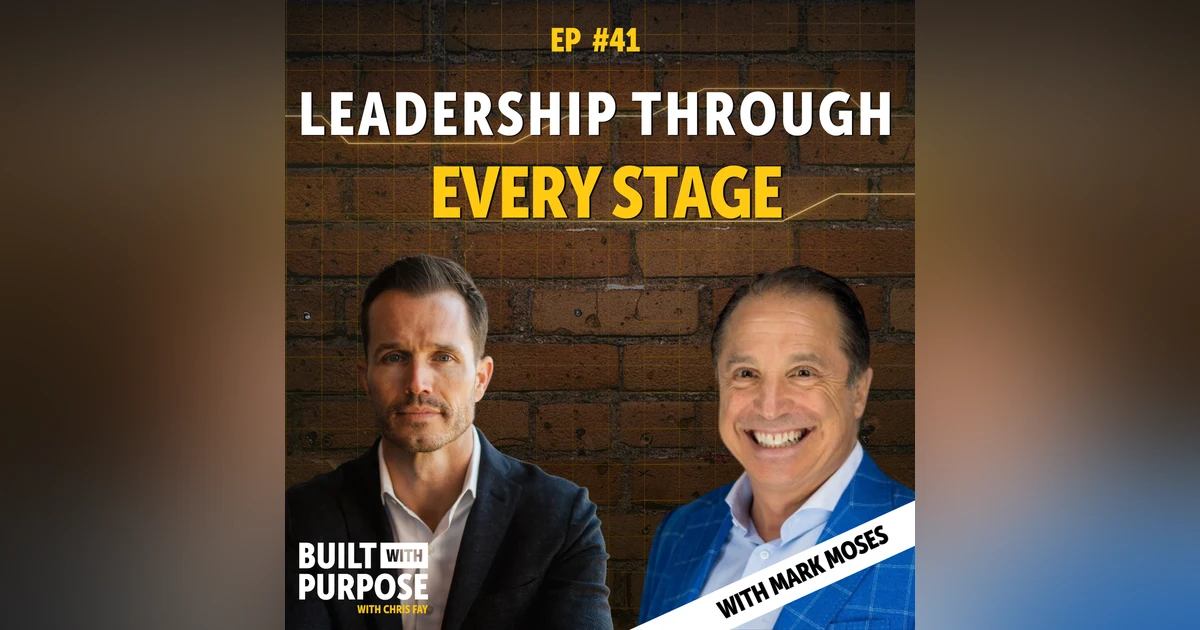
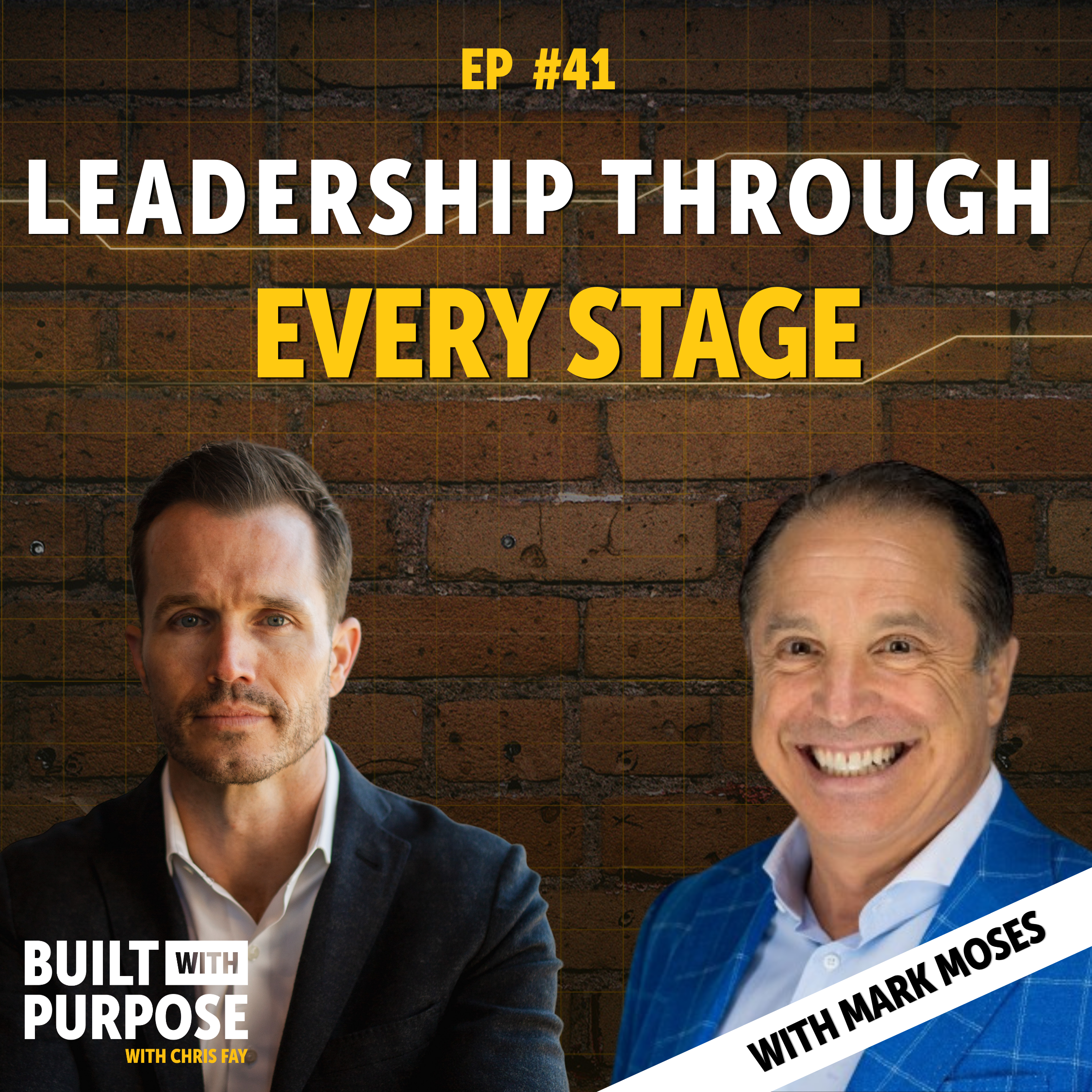


In this insightful episode of Built With Purpose, Chris Fay sits down with entrepreneur, investor, and CEO Coaching International founder Mark Moses for a conversation about leadership, growth, entrepreneurship, coaching, and the transformative impact of AI on business.
Mark shares his journey from growing up in a small mining town in Canada to building and selling multiple companies, including a painting business he launched while still in college and a mortgage company he sold just before the 2008 financial crisis. Along the way, he reveals how watching his father go bankrupt shaped his mindset, fueled his ambition, and taught him the importance of resilience, ownership, and perseverance.
Together, Chris and Mark explore what separates great leaders from average ones, why most companies struggle to scale, and the difficult decisions CEOs must make as their organizations grow. They unpack the critical role of vision, talent, accountability, and continuous learning, while discussing why having the right people in the right seats is often the biggest challenge leaders face.
The conversation also dives deep into the future of AI, examining how business leaders can leverage emerging technology to create competitive advantages, build stronger companies, and become indispensable to their customers. Mark shares lessons from coaching more than 2,000 CEOs across 90 countries and offers practical frameworks leaders can apply immediately.
Chris and Mark discuss:
- How adversity shapes entrepreneurial success
- The five core responsibilities of every CEO
- Why most companies outgrow their leadership teams
- The challenge of making tough people decisions
- Building a culture that supports growth and accountability
- The opportunities and risks AI presents for business leaders
- How to use AI to create a competitive moat
- Becoming indispensable to your customers
One of the most powerful moments of the episode comes as Mark challenges leaders to think beyond their current limitations and ask a simple but profound question: How can you use AI to become indispensable to your customers?
Key Takeaways
- Great leadership starts with clarity of vision
- The right people are essential for sustainable growth
- Fear often prevents leaders from making necessary decisions
- Continuous learning is a competitive advantage
- AI is changing business faster than most organizations can adapt
- Companies that embrace AI strategically will create new opportunities and market leadership
- Success comes from thinking bigger and challenging self-imposed limitations
Connect with Chris & Mark
Chris Fay
LinkedIn: https://www.linkedin.com/in/cjfay/
Mark Moses
Chairman & Founder, CEO Coaching International
LinkedIn: https://www.linkedin.com/in/markmoses/
CEO Coaching International
Website: https://ceocoachinginternational.com/
Chris Fay: Welcome to Built with Purpose. I am Chris Fay, and this is the show where vision meets execution and leadership leaves a legacy. From design studios to innovation hubs and product lines to skylines, we meet the people building more than great companies. They're creating culture, driving impact, and shaping what's next. These are the stories and strategies behind how the world gets built with purpose. Welcome to Pill With Purpose. â I am Chris Faye, your host. Today with me is a â a buddy of mine and actually a new business â partner of ours, is â Mark Moses. He is the founder and chairman now, chairman, which will ask a few questions about that in just a bit of CEO Coaching International. They coach some of the biggest and brightest minds in the CEO space. And so Mark, welcome the show, man. Thanks for having me, Chris. It's gonna be a good â good conversation. I know I was I was telling Mark I'm gonna be down Mark lives down in â South Florida and I'm gonna be down his way tomorrow. But Mark, you're actually heading out for Europe tomorrow, and so we're gonna we're gonna miss each other potentially in the air. Yeah, we're heading off to a YPO Format's daughter's wedding in Tarmina. â my gosh. Okay. Is that first time there? Second time. We were happened to be there last year, too. â didn't know that I was gonna be back again this year, but Tamina's a beautiful place and we look forward to it. â so cool, man. That's that is awesome. Well, Mark, I'm I'm really excited to have you on the show today. I mean, just a little bit of framework for for the for the listeners. I got introduced to to Mark â through our young president's organization, YPO, â that Mark mentioned. And then I actually am working with â Mark's company with one of their CEO coaches. And so I've had the I guess the pleasure to experience what that â what that work has been like. And obviously, Mark, I want to dive into that a little bit later, but honestly, you have got A really amazing background as far as where you've come from, the experience of experiences you had. I've realized that you're a squash champion. So that was is that â squash champion, marathoner. I mean you got you got this an amazing history. So kind of lead lead us up, give us a little bit of a high level, maybe a thirty thousand foot view of like, you know, just what your experience has looked like and and ultimately what led you to get started with â CEO coaching. So I grew up in a small town in Canada, a little mining town. 250 miles north of Toronto. It's a nice place to live, but I wanted to get out. So when I went to college, my dad had gone bankrupt when I was 17. And â so he didn't have any money to â to help me out with college. So he gave me a thousand dollars and said, â it's all I can do, and â you gotta figure it out. And You know, it was a tough time in my family's life watching â your father, who's an entrepreneur, go out of business. But it was the best gift he ever gave me. Because I learned that if I want to go to college, I gotta figure out how to pay for it. â if it was meant to be, it was up to me. So when I was â 19, I started my first company while going to school full time and It was pretty cool. â being an entrepreneur, figuring it out as you go. And we just started painting homes okay â for people in the neighborhood. I hired some other students and â that first summer I did seventy thousand dollars worth of business. Holy cow. â made eighteen thousand dollars. It only cost forty five hundred dollars a year to go to school in Canada. So â I felt like I was I was paid for school. Play for school flush with cash and â which was wonderful. And then I did it again the next summer and â made thirty five thousand dollars in â in profit. And I thought I was going to school to become an accountant. I don't know what I was thinking then, but I I figured I could end up hiring an accountant and â so it led me to â lifelong entrepreneurship career. So went from my â little painting business, then I moved to California from Canada, set that up in California, same business. â set up 250 locations, grew it to three thousand people, sold it when I was twenty six, then moved into the mortgage business. I I felt qualified to be in the mortgage business because I had a mortgage. Uh-huh. And â So then did that and you ran a three thousand person painting company. I mean, you know, of course mortgage is like the easy next logical step, right? Right. so â I did the mortgage company for thirteen years. â it was an amazing ride. It was it was filled with â triumph and defeat and â ultimately â grew it to one point six billion in annual business. Wow. After several failures along the way, that had me with bankruptcy schedules filled out at one point, and â we could talk more about that if you want. And â but I I ultimately sold the business October of two thousand and six, just before the global financial crisis. So sometimes better be lucky than good. Yeah. So my timing was very lucky then. And then â a couple years later, I just by accident somebody asked me to coach them. And â I said, maybe I'll do it for a couple of months. And that was eighteen years ago. And if you fast forward to today, we're â I've been doing this now eighteen years. We have coached over two thousand CEOs and leadership teams around the world and ninety countries. We hundred and seven of those have exited for about twenty seven billion dollars. So it's been a exciting ride. We we employ â today â about seventy five former CEOs is our coaches that execute on the methodology that â we've taught them. Amazing. Yeah, I you know it's funny. I it so my son my son's about to be seventeen this summer. So your story like resonates with me because you know we're We're taking some risks in our business and really kind of thinking about that that next evolution. And I'm like, â my gosh, I need to make sure that â I can get past my son's seventeenth birthday without any â without any issues. But â no you and and Mark, I think one of the things I just kind of dive in just a bit is is, you know, what I've talked about in the show and we've talked about with some of our guests in the past is that, you know, how these experiences really shape who you are today. And I mean, just kind of listening briefly to your story. I mean, kind of witnessing your your entrepreneurial father having the financial issues, and then you having these amazing, you know, experiences of of of great business, you know, triumph, then obviously some some â some challenges along the way, but then ultimately you stuck with it and kind of got to that that pinnacle point of selling your business and then enabling you to to coach and then build build this company. But I mean, it's it's probably a pretty rhetorical question. But I mean, talk talk about the those struggles, like, like Were they are they like imprinted in your mind? Is that a is that just a chip on your shoulder that you have to drive through it? Like how how have you taken those really hard times and and kind of put that into practice today? Yeah, that's it's interesting. I think about that a lot. And I think about it with some of the interesting people that I've met. The there's a whole bunch of people that have experienced parents going bankrupt. And Those that I've gotten to know through our mutual organization at YPO â have done some amazing things. And it's part of what fuels us. For me, I was fueled by, you know, I gotta figure this out on my own. And also, it's I didn't have a choice. And so it was either step up or don't. And the don't was never an option. It was just having to figure it out. And I was also driven by fear of â watching what my dad went through and not wanting to go through that again. â not wanting to go through what he went through because I just saw at fifty ish years old and â having to start all over is pretty hard. Yeah. Yeah. And and so and so how when you you exited in in two thousand six, and great, by the way, amazing, amazing timing. That's sometimes being better â lucky, lucky than good sometimes is the â the right approach there. But like as you started your CEO coaching and and obviously you've developed this make big happen framework. I mean, how how much of that experience did you put into the CEO coaching international business and then and then kind of ultimately led you into the make big happen? Like did those Did those experiences change a bit of the framework that you deploy with your customers? Well, so I had we talked about this before we got started. I've been an athlete all my life. So I played competitive tennis, won the US squash championship, done a dozen Ironman, the world championship in Hawaii five times, and I've always had a coach for sports. And â then for business, I've had a coach since I was twenty four, and I've had some Wonderful coaches over the years that brought something to me that I needed at that time. And it's different stages of our life, we need different things. So the coach I think about the most really taught me what I was supposed to focus on as a CEO. And he said, Mark, there's really five things as a CEO that you need to focus on. Give me the list. So number one, Mark, you're responsible for the vision. Where are you going as a company and are you championing that vision? Number two, as an entrepreneur, you're ultimately responsible for cash. So you got cash, life is good. You don't have cash, it's not so good. And profit does not equal cash. You could have a business that's profitable and still run out of cash. Number three was ensuring you got the right people in the right seats. And the people that get a business from A to B. Aren't necessarily the same people. They'll take it from B to C and C to D, which is sad, but true. Number four was key relationships. Who are the most important relationships in the firm? Such that if those relationships were to go away, what happens to your business? And who owns those relationships? Is it you or somebody else in the firm that could potentially leave and take those relationships with them? And then number five is a process to continue to learn. You and I both learn through YPO and we learn through industry conferences. We both have coaches. And so great way to continue to learn. â we can learn a lot today from AI and our favorite LLMs, but just continuing to learn. So I'd always been coached in business, and that helped me all my experiences being coached. To develop the frameworks â that worked when I was running my business or businesses. And there aren't hundreds of best practices in terms of ways to run a business. There's a set of few best practices that really work. And those that do them, even if they're not that good, but have a system for running their businesses, often do better than those that don't. Yeah. And so what what percentage of the CEOs, I guess, that you've worked with in the past. Number one, have never had a coach before, right? And and and then and then number two is you think about vision, cash, right people, key relationships, and then this like desire of continuity of learning. Like where where do you see most CEOs not falling down, but maybe not recognizing? Where's that like one of those five areas that you see the biggest â opportunity for improvement in? Yeah, well, it's interesting. You could take me in another direction in a moment, but I'll pause on that for a moment. The biggest one, if I could pick one, eighteen years of coaching. Having the right people in the right seats. And that that one for sure is so why is it that most people don't have the right people? So let me ask a few questions just for your audience to think about this. And having spoken all over the world to YPO and other groups, I ask this question all the time. Would you rate every member of your leadership team today an A? As in an A, B, or C. The question is every one of them. Majority of time, majority. It's audience of 300 people, â maybe two people will say, yeah, everybody's an A. Okay. Would you enthusiastically rehire everyone again if you could? Well, that again is you might get two or three hands out of 300. Do you believe a current team will take you where you want to be a year from now? How about three years from now? You virtually always get no hands on three years from now. You virtually always get no hands on would you enthusiastically rehire them again if you could? And then you'll say, Well, well, is is good good enough then? Well, Chris is good. Yeah, but is he great? And is he the guy that's gonna take us where we wanna go? It's a different question. And so the I have learned that the longest time in our life as leaders is the time we lose confidence in someone, and that long period of time we do something about it. And A players, they wanna hang out with other A players. And like Jim Collins said, the only way to deliver to the people achieving is not to burden them with the people that aren't achieving. So when I ask people, how many people have you fired too soon? Everybody laughs and says, Well, nobody. So As we vacillate for six months, a year, ten years in making those difficult decisions, most people on our team later come back to us and say, What took you so long? Or we thought everybody knew but you. So what what what why why is that, Mark? I mean, obviously I like I think about in my own experiences and just you know, being maybe nicer than we should, you know, wanting to see the best in people and give them a second chance. I mean, but what why is why are nobody's hands going up in those scenarios? Is it just because they're that we're being nice and we're being loving and we're we're just trying to take care of our people or we need somebody from the outside to push us to think a little bigger and a little differently? Like what what is it? Why are why are we why are we all not taking action on these Yeah, yeah. So that's a loaded question. Which â when you asked the question a while ago, the comment I was gonna give you was â people don't think big enough. So everybody's got self-limiting beliefs. So once you've decided, let's just say somebody's revenue is forty million and you add a zero to it, now it's four hundred million. Now ask the question, do you have the right people to go from forty to four hundred? Over the next 10 years. So it's 10x growth over 10 years. It's only 26.7% year-over-year growth for 10 years. So it's not ridiculous. It's very reasonable growth. But the reason is they get stuck in the well, you know what? â they've been here since the beginning. They're part of the culture, they're a big part of the company. What happens if they leave? And they go somewhere else and take some of the people with them. What if the new person I hire isn't as good as the person that I had? And what impact will that have? What's everybody gonna think of me because I replaced that person? That's some of the things that people think about. What yeah, yeah, yeah. So it's it's fear. So what happens if it's my head of sales? And even though I rate my head of sales a five out of ten, but what if he leaves and takes some customers with him that I I would hate to lose now would have? What if he takes some of the good people with him as well? What impact's that gonna have on my business? And so those are some of the things that people feel. And then there's we live on the same street. Our kids play together, we're all part of the same circle. He's in my YPO chapter, plays at my golf country club. So we're so interconnected that this question about, well, would success recall three years from now. And is the team that you have today the team that's going to take you where you want to be three years from now? If the answer is no, you got to make a change. It doesn't necessarily mean every time. That somebody needs to leave the organization. And for example, â this client of mine had this great woman run an HR. And â however, we're now over 4,000 people working in the company. She's never watched that movie before with that many people, was overwhelmed, fallen behind, frustrated, losing confidence in her ability to do this. We didn't get rid of her, we brought in a chief people officer. Over top of her. He was sixty years old. The plan was he was gonna work for the next four or five years and retire and school her up to take that role instead. So there doesn't mean these people need to be fired, but how you upskilling them to be the organization that â you want to have for yourself over time. And and do you like so that that's a great kind of statement. I was just thinking about some of the companies, some of the folks that I have 'cause we're We're taking steps that we've never been through before, right? And so there's this idea, and I would say just whether it's everybody or maybe just me of like, you know, these people that have helped get us to this point, let's find a way to continue to grow and develop them so they can kind of make it to the next step. But then sometimes you need to bring, you know, talent in from the outside, whether it's kind of over top of, you know, in support of or in replacement of. Like, how many times do you feel like going going in that 10X level? How many how many times do you find people that are able to upskill, right? Kind of along that journey versus just having to get new folks? Like is it is it is it more often than not that you can train and develop, or is it more often than not that you probably just need to find somebody else that has maybe that 10x experience? I'm gonna grab my microphone for this one. This because this is an important answer. â almost never. Yep. Yeah, and and the reason is hey, I give you so many case studies. We've had one hundred and seven of our clients sell for twenty-seven billion dollars. And so now go back and study the hundred and seven and go, Well what happened along that journey? In almost every case, people were placed multiple times along the way. 'Cause I g I'll give you example, â this client of mine, YPO or â Rich Ballot. He went from seventy million, I think you met Rich. And Rich. So he is seventy million minus eight and a half million in Ebita, rates his â head of sales. I said, Hey, how do you you're head of sales? He has a sales problem. Scale of one to ten. How how effective is he? He says he's my best friend from high school. I said, I didn't ask you that question. I said, How effective is he? He said, Okay, is it two? So we ended up hiring the best person in the whole country, and his revenue went from 70 million to 330 million. Ibita went from minus 8.5 to 29 million in 39 months. And it was like, wow. And that was a complete redo. Started in that role and then worked our way through all the roles. Now today's â over three billion in revenue. The team's turned over multiple times because it's a completely different skill set running a company at let's say 70 million or 100 million, and then running a company at half a billion or two billion. It's very different. My client Task Us, who's a a longtime YPO as well, we went from six million, six million in revenue to â last year they did one point two billion in revenue, and along the way. You know, is every two or three years we had to trade people out. Not all of them at once, but â we had to upskill the CFO, especially when we â sold part of the company to Blackstone. Then we went public. It's a very different skill set. â having to â deal with, for example, having a Blackstone as a partner or being in a public company. Very different skill sets along the way. So you as a leader need to match. What talent do I need to achieve that outcome that I really want to have? And that is across the board, worldwide, same issue, virtually every company. How often is it is the CEO the wrong person? Well, that's an interesting question. If you are the founder, I get asked that question all the time. If if you're the founder and â it's your business and You're 100% shareholder, or maybe you have a partner. â you still could be the problem. The question is, who do you need to attract to make up for your weaknesses? Right. And so, and at some point, â you probably need a really strong president or chief operating officer, a strong CFO, â these days, a chief AI officer. â who's on your leadership team that's really going to take you where you want to go? And â I remember the example I just gave you with Blackstone. The young CEO was 32 at the time, and he said to me, Do you think I'm qualified to lead a â a Blackstone company? I said, I don't know. â do you want to? And are you willing to build a team that'll enable you to perform at Blackstone? Then he said, Do you think I'm capable of being a â a public company CEO at â 35 years old? I I don't think so. â but he's still there today as the CEO of the company's built an incredible team around them. So it's really up to the leader. Are they willing to surround themselves with the right people? Get aligned on the vision, get aligned on â who owns what, and then get out of the way and let them do their jobs. And and then how how just I'm thinking about one one of my minds goes to managing culture. So you're like every two to three years, you know, there's some sort of change, fundamental change on the leadership team. And so, you know, if you're a if you're a contributor in the business, maybe let's call it for five or ten years as either an individual contributor or kind of moving up the ranks or you found yourself there and you and you see and I don't want to call this turnover by by means 'cause as a bad thing, but but how what are kind of some the best practices a CEO can deploy as as we're making these changes on the leadership team, you know, to manage that culture. Because I know when you when people see, especially in, you know, small to mid-sized businesses, I would think that when when CEOs are so â focused on culture, you know, and I would say that we're probably one of those, one of those people, you know, I would say I, we sometimes get sensitive to the thought of turnover in the business. Like, â my gosh, like what's what's the perception of this gonna be? We're talking about growth and change and these opportunities to to to â build this business for the future, but but yet, you know, this I this executive just left or You know, had to replace this person with a new head of sales. I mean, how how do you find that managing culture changes when you're trying to pursue this level of growth? The CEO's job, as I mentioned earlier, is to champion the vision. Where are we going? And ensuring that they have the right people on the bus to do that. And it doesn't happen overnight. So let's say you have these ambitious goals and you're meeting every quarter with your team. What went right this quarter? What went wrong? What'd you learn? How did we do on the goals compared to how we said we would do? How did we do on the activities we're keeping score on that we said would drive the outcome that we want? You're not replacing the people that get done what they say they're gonna do every month and every quarter. You're ultimately replacing the people that fall short quarter over quarter. They just can't get it done. There's really no surprise. when it comes. Gotcha. Yeah, ca yeah, cause to your point, if you're if you're kind of measuring and holding teams accountable and exposing, you know, metrics and performance, if they fall behind, it's really a them problem and not necessarily a a company problem because it's it it should be visible, right? Yeah, it's gonna be visible to everybody, especially if you're publishing your scorecards on how we doing compared to how we said we were doing, how we doing on everything that we're measuring every day, every week, every month. Either we're hitting it or we're not. So we can we'll we'll do everything we can to help, but ultimately leaders gotta own it. And so in whatever role that you're in, do you own it? And then and then how does if I'm thinking about the roles and responsibilities? So a lot of our listeners are in the you know, manufacturing, technology, construction, design space, and so you know, l different different businesses, but all facing the same challenges. And you and you think about just a a a basic organization with you know kind of president and CEO. You know, you've got the leader of sales, and then if there's implementation or delivery operations and finance and HR and all kind of the pieces, like is there one singular role that you typically come back to and say, look, we gotta first thing, instead of tackling, you know, kind of scorched earth with with â these five or six or ten leaders, we need to really focus on A. Is it what what is kind of the the the number one starting point? Is it the biggest problem or is it revenue or is it finance and CFO? Is where where do you where do you tend to see kind of the first level of attack of of leadership upgrade, I'd say. Yeah, it depends on the business, but â in generally, what do most most people you meet in YPL, what do they want? They want more revenue. Right? So you you're tackling your revenue engine. And then and then I I had to you mentioned it a bit ago. So just kind of pivot on you a little bit as we start to talk about AI. You mentioned kind of the core leadership roles that that would be inside of any s any organization, but then there's this you know, chief AI officer, AI lead, kind of tech lead, and just trying to think about with everything that's going on in the world today and the pace by which change is happening around artificial intelligence. I mean, talk to me about that a little bit. I mean, what I know you all are doing a lot in in kind of the AI education and and making sure that your companies â that you support are are well positioned, but where where do you see kind of the state of AI in business? Maybe that's maybe that's kind of one one key question. And then where do you see, like as you look across all of your customers and the people that are â that you all are supporting? I mean, are are people behind? Are they kind of on track? Are they ahead? I mean, what's what's kind of your view of where businesses are in this ecosystem? One thing about AI, it's it's here, it's happening super fast, and it's gonna continue to accelerate. So what does that mean for leaders in running their business? And what does it mean for organizations? Is this a technology problem, or is this a structural leadership issue? It's right to interesting, right? It's â think about it this way: â am I investing everything I can in having the right leadership to drive what I want as a result of AI? So here's some questions to think about â that I like to think about when I think about AI. How do I use AI in my business to become indispensable to my customers? How do I use AI to maybe build a moat around my business? How do I use AI to drive a lot of cost out of our organization? Especially in roles that are y you maybe have fifty, sixty, eighty people on a role. If you can train a human to do it, you can clearly train a machine to do it. So how do I use AI to make me faster, better, cheaper, higher quality? How do I use AI to do that? And so AI is gonna continue to come at us. How are we gonna use it to build better companies? And unfortunately, this time, if we don't move quickly, somebody else is gonna move there ahead of us and take market share away from us. So I think it's an important question for businesses to think about what is success three years from now? I know it's hard to think beyond that today, and then how do I position my company? To achieve what I want three years from now, and how do I leverage AI to become the player? And and so where do you find when you ask those questions of of businesses? I mean, where where do you find most CEOs or or or business units? Are they feeling they're that they're behind? Are they feeling that they're kind of on track and they have the right leadership team in place? I mean, what's kind of the general temperature check of the average business that you work with? Yeah, I would say Well, I'll let's go to the â the world as a whole. Behind, really behind, and it's moving at a faster pace than most people can digest. And so how now you ask me more specifically, how about our clients? I would tell you that they're also behind. And â but they're working on it because they're being pushed to thinking about it all the time. But generally Most people are behind. â because they didn't w when say about 18 months ago, and â 18 months ago, probably a lot of people, the majority of â your and my colleagues never even heard of Chat GPT 18 months ago. We're just starting to learn about it and â and start playing with it. Now, can you imagine is there a day that goes by that you don't use one of your favorite LLMs every day for something? And the quality of it continues to get better and better. So the speed of it is happening faster than the people can digest it. Additionally, people are reacting to something that they read, something that they heard, something that a friend told them about, or somebody in the organization said. The question is, I remember when â I went into one of my clients that has â about 2,000 Verizon stores, and I asked â his â technology leader, a CTO, presented on their AI plan. It was impressive. Then I I'm sitting there thinking about it and I wondered, it was a lot of stuff. And I wondered which one of these, of all this shit. helps us achieve one of our top two or three goals that that we have for the year. He said, I don't know. So are are you focused on the right things? What what are you trying to solve for? And are you using AI to help you achieve your goals, the goals that you really want, whatever those goals are, or are you just doing stuff that's easy that you heard that We'll likely have an impact, but not really move the needle on your business. Yeah, and I think and I just know from our own experience and then talking to â a number of folks, that the I don't think we're used to we just as a call a population or a series of CEOs and and business leaders, even though things have historically always moved very quickly, I don't think any of us have ever predicted the level â the pace of change by which AI is influencing. And so we had a we had a conversation internally today and There was kind of retrospective on some of the technology that that that we have, you know, from maybe six months ago. â you know, six months ago, you know, it wasn't really ready, it wasn't out there. Well, well, now it is, right? It th this isn't like years and years and years of innovation. This is like weeks, you know, days and weeks and and months. And so I think that, you know, we're trying to make sure that we're reframing our mind to say, yeah, I mean, of course, you know, Claude couldn't do this six months ago, but today it actually could. And if you've if you've if you take that pace of change over the last eighteen months. And you project it forward another 18 months, it's probably gonna move significantly faster and have that much more capability. So I think some of us are just re wrestling with just the pace of change. And I think just embracing that pace of change and really starting to forecast, well, if that level of change happened from that point to today, what's that level of change gonna look like, you know, six, twelve, eighteen months from now? Really, really hard to forecast â how much change is gonna happen. For example, I I live in Miami. There are, I'll say maybe three or four months ago, there were no Waymo's in Miami. They're everywhere now. And so I'm sitting there thinking when there's four lined up right at the light, right all in line together, I'm going, â my God, â what's gonna happen to the million Uber drivers in the US â over what the next two years? Are there gonna be any Uber drivers left? And You just start thinking, well, what's what's the impact's gonna have on the auto industry? â the the ripple effect of this is gonna be incredible. And so businesses really need to think about who are the leaders in their business. And now it was a just recently, the â the first billion dollar company, billion in revenue with one employee, it's a it's really changed the game on how. A business can compete today and what a business needs is going to continue to change. So what's what's your thought? So that's a that's an amazing, you know, you think about the impact of Waymo. And I was in Atlanta â a couple weeks ago. They were just, they were all over the place, you know, and and and I live in in South Carolina, and so obviously not a major â hub of Waymo attack yet. But you know, so so just as business leaders, there's this like fear of is AI just gonna completely take out our our business model? Or Is there a business opportunity for us? Obviously, it's going to look significantly different. Like we're in the tech space and software and consulting space, and all of those are being, you know, disrupted. â you read articles about SaaSpocalypse and you know the way software is changing and the way delivery models are changing. And so there's this one question that says, Man, are we just doomed? You know, or is there really going to be an opportunity for us? But we just have to be prepared to change. And maybe our business is going to look different. So what's your like â just broad viewpoint of You know, is this just gonna put all of us out of business and we're all gonna be on, you know, universal payroll and healthcare and you know, living out on farms together? Or is this also a a really strong business opportunity â that we're gonna create more jobs and new companies and new applications that have never been generated before? I mean, what what's kind of your just personal? I'm gonna take the ladder. There's gonna be all kinds of disruption and â who's it was it? I think it was Dario â from â Anthropic said white collar bloodbath? Yeah, it's scary. I got kids in their 20s, so and I see their friends all the time. Employment is really hard for kids coming out of college today. And â for example, who needs an analyst at a PE firm or investment banker today when you can just have Claude, for example, do all that stuff faster. You don't have to we train it a little bit and but the analysis it'll do for is incredible. You made me think of a couple of things. One of them was when you talk about â SaaS and the meltdown as an example. I ride my bike with this guy, and â in two thousand twenty-one, he sold â twenty five business for seven hundred million dollars. It was â 40 million business, 40 million in revenue and a little bit of profit. SaaS. â he's now over a hundred million in revenue, just a little over a hundred, making fifteen million dollars profit a year. The valuation today is two hundred million. Wow. He's way more successful, way better business today than he had back then, but he's in the sa SAS space and is completely undervalued today. And â so the landscape really changed. Now think about â the other example I want to give you. The other day I was hiring somebody, and I went to â I went to Claude and I said, â I'd like you to play the persona of the top PE firms in this particular space. And then I'd like you to design an appropriate â compensation program with bonus tied to the objectives that I want, and then design an LTIP program. Exactly the way the top PE firms in the country, in the space, would design it. Moments later, I had it all done and they said, â what format would you like it in? Would you like it? â I prepared three, I can prepare three different versions for you in Excel so you could play with all the levers and et cetera, et cetera. God, all this, the full LCP program done with everything that I would need. And I'm going, wow, that just is. Just think all the jobs that just got displaced right by what I just described. And it's amazing â when playing the persona of even â a little risk in this, but even what would the â top doctors in the world in the world, not just in the US or not in my neighborhood say for whatever diagnosis? â how would they tackle this exact issue? based on this set of facts, upload your MRI, upload your x-rays, all that stuff, and get incredible answers that you could not get in real time so fast. Sixty days ago, 90 days ago, 120 days ago. It's amazing. It's gonna keep changing. Well it's scary. I mean it really is. And you you mentioned the the college entrance. I mean I've got a 14 year old and a 16 year old and you know they're gonna be finishing school and going to college and we're talking about like what they want to do and One son wants to get into business, one wants to start a company, which is which is really cool. But you know, you start thinking about as those entry-level roles are replaced by technology, and then you have, you know, â let's call it older or more experienced individuals that are doing a lot more of the thought work, maybe at the high level, you know, it almost creates some level of an artificial â barrier to entry for from younger people getting in to then ultimately acquire the skills to be the more you know strategic thought leader in the business. And so It'd be really interesting to see how that's gonna impact â these roles. Cause you think about, hey, I just graduated a marketing degree. Well, entry level entry level marketing has has changed forever. You know, hey, I'm â just a SDR, BDR, you know, sales outbound role, you know, entry-level analyst, entry-level accountant. I mean, as as those roles begin to evaporate, you where where do these kids go? Like where where do they go? So years ago. â they thought the radiology industry was in deep trouble. Did you read this? I did, yeah. Yeah, but keep going. But I think it's a fantastic example. And â so people stopped going to the radiology school and getting their whatever degrees they need to read all these things and â all the technicians. But what happened was the the pie grew so much bigger than now there's a massive shortage in that. So There, I think there's gonna be a lot of opportunities, but it's just gonna, but there's also gonna be a lot of drama in terms of it's gonna be changed. There's gonna be businesses that are gonna go out of business, there's gonna be a lot of them. There's not gonna be as many wiz winners, but it's what an opportunity for your kids to become entrepreneurs. What problem do they want to solve and use all this new technology that's virtually no cost to help build? Whatever they could go they could do anything now. Yeah. Yeah. It's endless. Yeah. And and honestly, to your point, the barriers to entry for them to start solving problems for customers, they can do it a lot faster, they can do it a lot cheaper. You know, we were talking internally because we we work kind of in this design, build, manufacturing space that this morning is the the problems of of of of an industry need to be solved potentially by industry experts. So the thing that we have is we have industry. Expertise, right? So as as far as this like hor not it's not necessarily horizontal experience, but it's deep vertical experience. And our belief is that's one of the competitive advantages and the moats that we have compared to kind of just the the the generalist. And I was just thinking some companies that I've talked to is just, you know, where where is your unique value proposition? You know, where can you dive really deep to solve customers' problems? But if you're not going deep enough and and you're just kind of Wide technology platform solving problems for anybody and everybody. I just feel like those are the ones that are potentially more at risk than the ones that can really solve deep domain â challenges in businesses. Chris, think of your own business for a moment. Think about what it is that you really want and how you can use AI to get it. And I really like the question about indispensability. How do you become indispensable to your customers through the use of AI. Yeah. Imagine if every business could answer that question. Wow. How do I become the market leader with the use of AI? What would have to be true? I love that. And I think that's and I know we're getting up on time, so I want to watch the watch the clock. That I think that's a that's probably the the best kind of call to action for you know any leader or any CEO that's that's you know listening to the pod today is just thinking about like You know, what is that fill in the blank leveraging AI? You I like you added that little AI tagline. Like what's your unique value proposition by leveraging AI? You know, just adding that little We talked about the mode a moment ago too. How do you build a mode around your business using AI? Well, Mark, I tell you what, man, this has been amazing. And I know these things go so much faster. I'd I would love to keep you on the horn and sit here and talk. But I I just wanna I you know, â that might be your Closing statement is using AI, but just I want to bring you back just a little bit to what we were talking about and vision, cash, right people, relationships, this like continual learning. We have this this â AI conversation that we've had and these experiences. I mean, just kind of come back and if, you know, if there's kind of this the this this parting, â our our listeners could do one thing leaving today's call, right? If they're if they're CEOs, if they're leaders, if they're coaches, whatever their role, role responsibility is, like they leave here today. What's the what's the one thing? you know, in the next week that they could take action on to help move their organizations, their teams, their businesses one step forward. You asked for one. I'm gonna give you a couple more than one. I hope that's okay. That's okay, man. It's your answer. First is get clear on what you really, really, really want. And second question is how do I use AI to help me get it? I love it, man. That was awesome. And then now Go if I go to the third question, which is how do I use AI to become indispensable to my customers? They it's a really hard question. And â those that figure that out are gonna build amazing businesses and and transform their own businesses and the lives of their employees. It's awesome, man. Well, Mark Moses, I cannot tell you how much I appreciate you hopping on the show today. It was absolute pleasure to catch up with you. I know you're getting ready to travel tomorrow and I wish you just amazing, â amazing travels and Looking forward to catching up soon. I'll be down in Miami â over the next â couple months as well, and we'll have to spend a little bit of time together. I'd love to see you when you come back to Miami. I'm off to begin the summer journey in Europe. And â it gets a little hot here in Miami, so we go high over in Europe in the summer. Good for you, my friend. Well, thanks for attending the show today, bud. Well, thanks for having me. It's good to see you. You two are okay. Thanks for joining me on Built with Purpose. If you have enjoyed today's episode, subscribe, share, and us a review. It helps more bold leaders find the show. For resources and show notes, visit our website and connect with me, Chris Faye, on LinkedIn. Until next time, keep building great companies, cultures, and legacies with purpose.


